
Ghazi Burhanaddin: Eminent Representative of Azerbaijani Vernacular Poetry
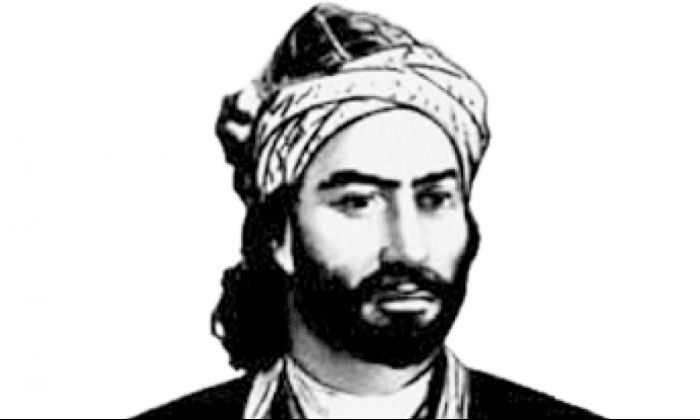 Ghazi Burhanaddin, the poet, eminent statesman, and renowned military commander who laid the foundation of the first native-language divan, was born in 1344 in present-day Kayseri (Qaysariyyah), Turkey. The poet’s given name was Ahmad, his honorific was Abul-Abbas, and his pen name was Ghazi Burhanaddin. His father, Shamsaddin Muhammad, was among the prominent qazis (judges) of his time. Burhanaddin’s mother was the daughter of Abdullah Chelebi, son of Jalaladdin Mahmud Mustafa, a distinguished figure of the Seljuk period. Having lost his mother at an early age, Burhanaddin was raised by his father. In 1356, due to unrest in Qaysariyyah, Burhanaddin and his father relocated to Damascus (Dimashq, Syria). They later returned to Qaysariyyah. After completing his primary education, Burhanaddin traveled to Egypt with his father in 1358 to pursue further studies. During his time in these cities, he mastered theology, medicine, astronomy, philosophy, mathematics, logic, calligraphy, and other sciences, as well as Arabic and Persian languages. At the age of 19, the poet journeyed to Makkah al-Mukarramah and resided there for some time. Following his father’s death, he moved to Aleppo. In 1365, he returned to Qaysariyyah and married the daughter of Artan ruler Muhammad. Soon after, he was appointed as a qazi in the court. Serving in this position for over a decade, Ghazi Burhanaddin earned public admiration for his profound scholarship and just governance.
After the death of Artan ruler Muhammad, his son Ali succeeded to the throne. Due to Ali’s minority, Ghazi Burhanaddin assumed administrative control of the state. In 1378, he was appointed vizier of the Artanid realm. Two years later, upon Ali’s death, Burhanaddin became atabeg (regent) for the infant heir, thereby consolidating power. In 1381, Ghazi Burhanaddin ascended the throne as sovereign, founding a new polity that bore his name and being proclaimed sultan. During his reign, the state achieved significant economic and military strengthening. Sultan Burhanaddin prioritized commerce, educational-cultural development, and infrastructure: he commissioned madrasas, caravanserais, and bridges, while implementing expansive construction programs.
Despite devoting his entire life to uninterrupted military campaigns and battles against both internal and external enemies, state governance did not hinder Ghazi Burhanaddin from engaging in scholarly and devotional pursuits, with his philosophical ideas being preserved in two Arabic treatises – “Tarji’ al-Tawdih” (“The Recapitulation of Explanations”) and “Iksir al-Sa’adah fi Asrar al-Ibadat” (“The Elixir of Bliss in the Mysteries of Worship”).
He composed poetry in three languages—Azerbaijani, Persian, and Arabic—with his Azerbaijani Divan preserved in a unique manuscript transcribed during the author’s lifetime by calligrapher Khalil ibn Ahmad, currently held at the British Museum after being transported to London in 1890 by Thomas, an employee of the British embassy, from Istanbul, where a photofacsimile of this Divan was published in 1943. M. Ergin’s complete printed edition in 1980, while in Azerbaijan, corresponding member of AMEA Professor Alyar Safarli first published samples from the Divan in 1976 before preparing the complete edition published in book form in 1988. This “Divan” comprises 1,319 ghazals (an Arabic verse form dealing with loss and romantic love), 20 rubāʿīs (a Persian form of several quatrains), and 108 tuyuqs (is a classical form of poetry in Central Asia found in classical Turkic poetry).
Ghazi Burhanaddin is recognized as the founder of the tuyuq genre in Azerbaijani literature, being the first to compose poems in this form in his native tongue.
Ghazi Burhanaddin composed numerous poems extolling divine love and mystical passion, establishing an influential tradition that profoundly shaped the works of later literary masters including Muhammad Fuzuli, Imadaddin Nasimi, Kishvari, Habibi, Shah Ismayil Khatai, and Molla Panah Vagif.
The motifs of valor and heroism are prominently manifested in Burhanaddin’s poetry. As a poet whose life was marked by battles, his verses summon warriors to combat, calling them to fight for truth and justice. Medieval chroniclers bestowed upon Burhanaddin—whose life was spent in military campaigns—the epithet “Abu’l-Fath” (Father of Victory, or Possessor of Conquest).
Ghazi Burhanaddin perished in battle against the Aq Qoyunlu ruler Qara Yoluq Osman bey in 1398 and was buried in Sivas. Although sovereignty passed to his only son, Ala al-Din Ali Chelebi, the state was overthrown the same year by Bayezid I (the Ottoman Sultan).
Recommended literature:
- Bürhanəddin, Qazi. Divan / Q. Bürhanəddin ; tərt. Ə. Q. Səfərli ; red. S. Q. Əlizadə. - Təkrar nəşr. - Bakı : Öndər nəşriyyat, 2005. - 728 s.
- Azərbaycan ədəbiyyatı tarixi : 10 cilddə / AMEA Nizami adına Ədəbiyyat İnstitutu; red. heyəti: İ. Ə. Həbibbəyli [et al.]. III cild : Orta əsrlər Azərbaycan ədəbiyyatı: XIII-XVI əsrlər / İ. Ə. Həbibbəyli, A. Rüstəmova, A. B. Mirzəyev [et al.]. - Bakı : Elm, 2020. - 1092 s.
- Əliyev, Məmməd İrac oğlu. Türkdilli şeirdə təfilə və onun ritmik funksiyası : Azərbaycan şeirinin tarixi təcrübəsi əsasında: təfilə funksional təhlil müstəvisində / M. İ. Əliyev ; elmi red. Ə. Hüseynli ; AMEA Nizami Gəncəvi adına Ədəbiyyat İnstitutu. - Bakı : Elm və təhsil, 2023. - 168 s.
- Qulusoy, İlkin Etibar oğlu. Qazi Bürhanəddin "Divan"ının dilinin sintaksisi /İ. Qulusoy ; elmi red. Q. Kazımov. - Ankara: Sonçağ akademi, 2019. - 193 s.