
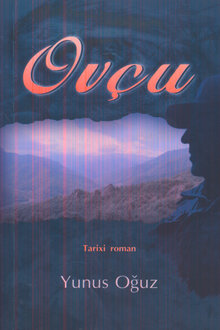
Ovçu: tarixi roman [Yunus Oğuz]
This is a compelling novel dedicated to the April Battles of 2016. Although it focuses on National Hero Murad Mirzayev, it is, more broadly, an elegy to the cherished memory of all the brave young men who were martyred in the Garabagh battles. The narrative introduces three characters named Murad, a coincidence that is both striking and noteworthy.
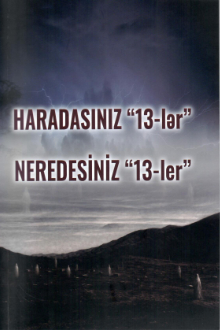
Haradasınız, "13-lər?" [Səriyyə Müslümqızı]
The book recounts the tragic life stories and still-unknown fates of 13 young men who were taken captive during the Khojaly Genocide, perpetrated in the night from 25 to 26 February 1992 and in the days that followed by Armenian armed formations and soldiers of the 366th regiment of the Soviet Army.
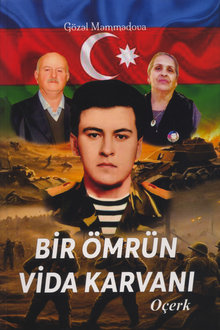
Bir ömrün vida karvanı: oçerk [Gözəl Məmmədova]
This essay is dedicated to the arduous and honorable life and combat service of Vusal Adalat oghlu Khalilov, a martyr of the First Patriotic War from Khirdalan.
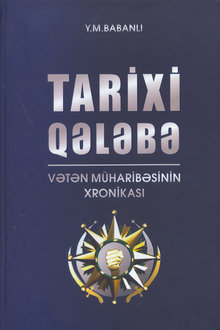
Tarixi Qələbə - Vətən müharibəsinin xronikası: dərs vəsaiti [Yəhya Babanlı]
The book presents an account of the 44-day Patriotic War — the counteroffensive operation known as "Iron Fist" conducted from 27 September to 10 November 2020 — including a chronicle of the liberation of Azerbaijani territories, settlements, and strategic heights from Armenian occupation. It also provides an analysis of the foundations of the constitutional order.
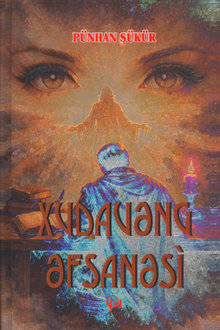
Xudavəng əfsanəsi: povest [Pünhan Şükür]
The book highlights the spiritual values of the Udi people — one of the ancient and indigenous inhabitants of the Eastern Caucasus — who, in the aftermath of the Patriotic War that resulted in Azerbaijan’s victory and the restoration of its territorial integrity, have reclaimed the Albanian temples freed from the control of the Armenian Church and now serve as custodians of this significant heritage.
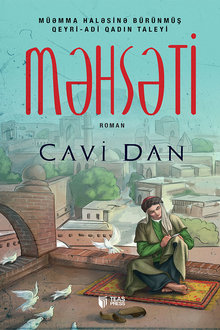
Məhsəti: müəmma haləsinə bürünmüş qeyri-adi qadın taleyi: roman [Cavi Dan]
Imagine a woman… Beautiful, young, intelligent, talented, and free-spirited… A woman who founded her own school of poetry, music, and even chess… An Eastern woman. Now imagine that she lived no less than 900 years ago. Are we more ancient, or is she more modern than we are? What was the attitude of the Eastern world toward a creative woman, her freedom, and her social activity 900 years ago, and how does it compare to today? Ultimately, who is Mahsati?

Seçilmiş əsərləri: şeirlər, poemalar, pyeslər [Bəxtiyar Vahabzadə]
Born in the ancient city of Sheki and eventually becoming a poet of the entire Turkic world, Bakhtiyar Vahabzadeh devoted his poetry, dramaturgy, and journalism, as well as his literary, socio-political, and pedagogical activities, to a single ideal: an independent, victorious, and free Azerbaijan, possessing sovereignty and national freedom. Vahabzadeh was a poet of thought, reflection, and independence. It is no coincidence that he was among the first to be awarded the "Istiglal" Order. His entire creative legacy was oriented toward the bright future of his people, and his poetry reflected both the dramatic and the glorious history of Azerbaijan.

Susan qadın: psixoloji-detektiv roman [Elxan Elatlı]
The main storyline of the novel The Silent Woman ("Susan qadın") revolves around the investigation of a crime. However, the nature of this crime is left for the reader to determine. What is certain is that a horrific crime resulting in death has occurred, and the perpetrator is being sought.
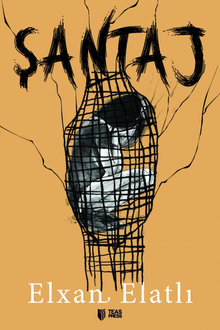
Şantaj: psixoloji roman [Elxan Elatlı]
A young woman from a remote countryside comes to Baku after successfully passing university entrance examinations, driven by the desire to obtain higher education and realize her aspirations. Due to a single mistake, she becomes the target of blackmail and is subjected to continuous threats and demands. As a result, serious and dangerous changes begin to occur in her behavior, worldview, and moral values. The novel, through a variety of vivid and expressive scenes, illustrates the consequences that fear can have on an individual’s life.

Uğursuz gecə: detektiv roman [Elxan Elatlı]
Nihal seems to be a happy woman at first sight. She is young, beautiful, loved by her husband, has two children, a fulfilling job, and a home in the city center. She experiences no financial hardship. Yet all of this represents only the external aspect of her life.