

World Book and Copyright Day
Wise people consider the book to be a source of knowledge, intelligence, wisdom, and excellence. And this is not without reason, because the highest qualities and the real enlightenment is acquired only by reading. Reading a book is a very important technique that nourishes the human soul and fills the spiritual void inside. A book is a spiritual legacy left by one generation to another. The history of our spiritual life has been closely connected with book since the earliest times, and with a view of meeting its needs the book was improved and assumed new forms.

Distinguished serviceman of Azerbaijan General Aliaga Shikhlinski
Aliaga Ismail aga oglu Shikhlinsky was born on April 23, 1865 in the village of Gazakhly, Gazakh region. In 1876 he graduated from a private gymnasium in Tbilisi, in 1883 - a military gymnasium in Tbilisi, in 1886 - an artillery school in St. Petersburg. Having been assigned to Alexandropol (Gyumri) in the 39th artillery brigade, he served in this brigade until 1900 and rose to the rank of captain. In 1900, Shikhlinsky, sent to the artillery division in Transbaikalia, was temporarily appointed as the acting commander of the 2nd battery instead of Samed-bey Mehmandarov, who was sent to St. Petersburg for a 6-month course in May 1902.
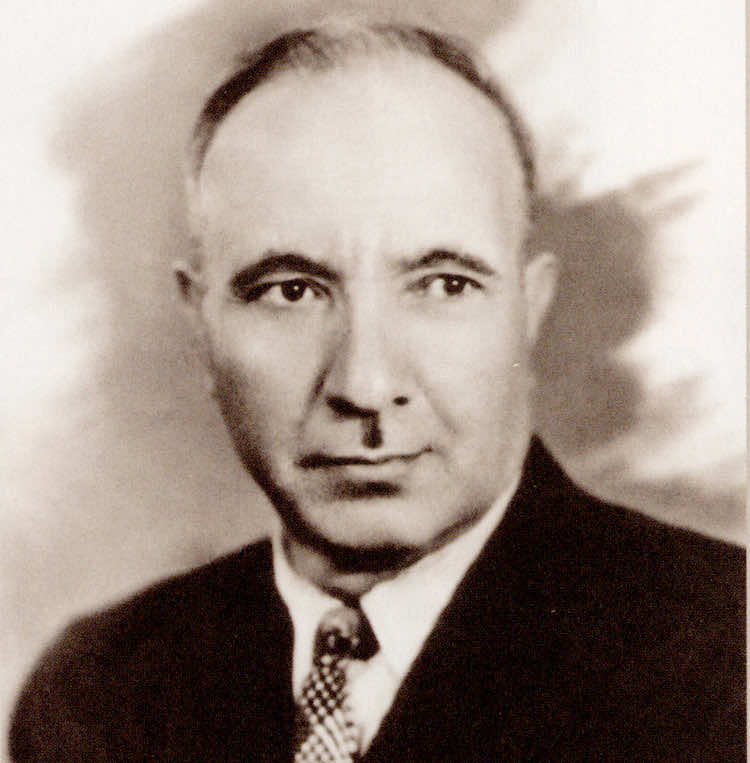
Prominent writer, literary critic, pedagogue Mir Jalal Pashayev
Mir Jalal Mir Ali oglu Pashayev was born on April 26, 1908, in the village of Andabil near the city of Ardabil, South Azerbaijan. However, fate took him to the ancient city of Ganja since childhood. After his father's death in 1918, he had lived under the care of his elder brother. In 1918-1919, he studied at the primary school of the Ganja Charitable Society. In 1924-1927, he studied at Ganja Pedagogical College named after M.F. Akhundov. In 1925, he was admitted to the Komsomol. During his student years, he was actively involved in public works, was elected the chairman of the student-youth organization of the college, and then the student-youth trade union organization of Ganja.
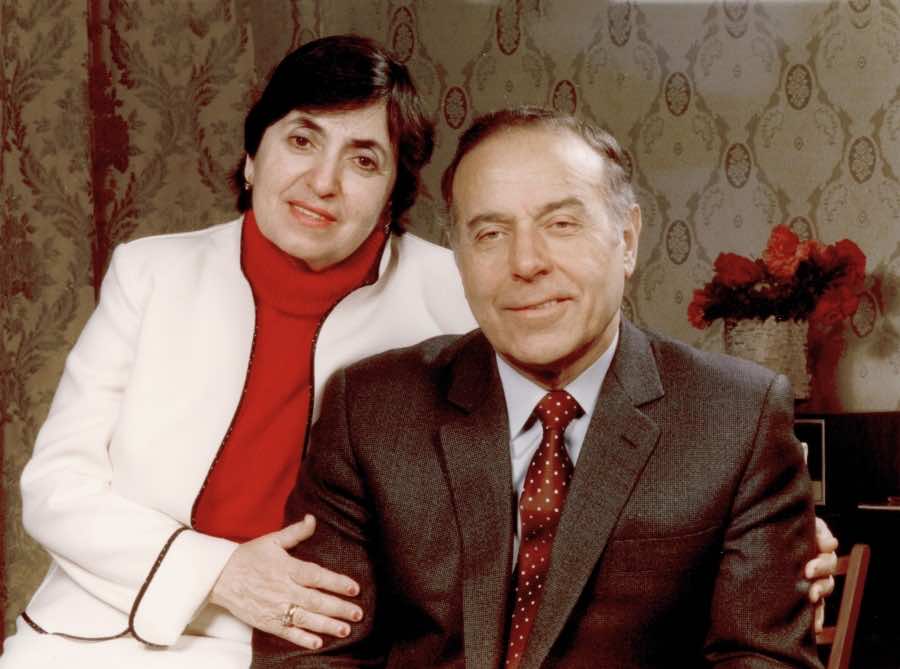
Outstanding ophthalmologist and scientist, Academician Zarifa Aliyeva
Aliyeva Zarifa Aziz gizi was born on April 28, 1923 in Shahtakhti village of Sharur region of Nakhchivan Autonomous Republic. In 1942, she graduated from secondary school in Baku with excellent marks, and in 1947 she graduated from the Preventive-Medicine faculty of the Azerbaijan State Medical Institute with honors. In 1947-1949 she was improved herself as a specialist in ophthalmology as a trainer in the All-Union Center for Doctors Improvement (Moscow).

International Twin Cities Day
Countries that want to take their rightful place in the globalized world should give importance to maintaining economic, political and cultural relations with other countries at a high level. In this sense, Azerbaijan, having taken the path of integration into the world, is trying to establish friendly and mutually beneficial relations with countries near and far abroad. Practical steps are being taken in this direction. Actions are taken both at the high level and at the level of public diplomacy, and friendly relations are established with the cities of different countries.

International Day for Mine Awareness and Assistance in Mine Action
4 April is the International Day for Mine Awareness and Assistance in Mine Action, designated by the General Assembly in 2005 to raise awareness and seek assistance for mine action. Today, the organization calls for the establishment and development of national mine action measures in countries where explosive remnants of war pose a serious threat to the security, health and lives of civilians and impede socio-economic development at national and local levels. Today, in the age of technology, mines have given way to more precise weapons. However, the experience of recent years has shown that mines are still a dangerous and potentially catastrophic force.

World Aviation and Cosmonautics Day
Azerbaijan has historically been at the center of scientific and philosophical movements studying the Universe and outer space, in a place of technological revival. Nasreddin Tusi (1201-1274), a major representative of the eastern scientific school, worked at the observatory, which he personally built in the city of Maragha, located in the center of Azerbaijan. The observatory built by Tusi surpassed all the famous observatories of the East in its structure, size and scientific research carried out there. The observatory built by Tusi surpassed all the famous observatories of the East in its structure, size and scientific research carried out there.

Universal Day of Culture
The world celebrates Universal Day of Culture every year on April 15. This date is associated with the agreement signed in Washington on April 15, 1935 "On the protection of artistic and scientific institutions and historical monuments", which became known in international legal practice as the Roerich Pact. The idea of creating rules governing the protection of historical and cultural monuments from the destructive effects of external forces belongs to the artist and philosopher Nikolai Roerich. At the beginning of the 20th century, during the wars and the redistribution of territories, while studying ancient monuments, he understood how important it was to preserve them.
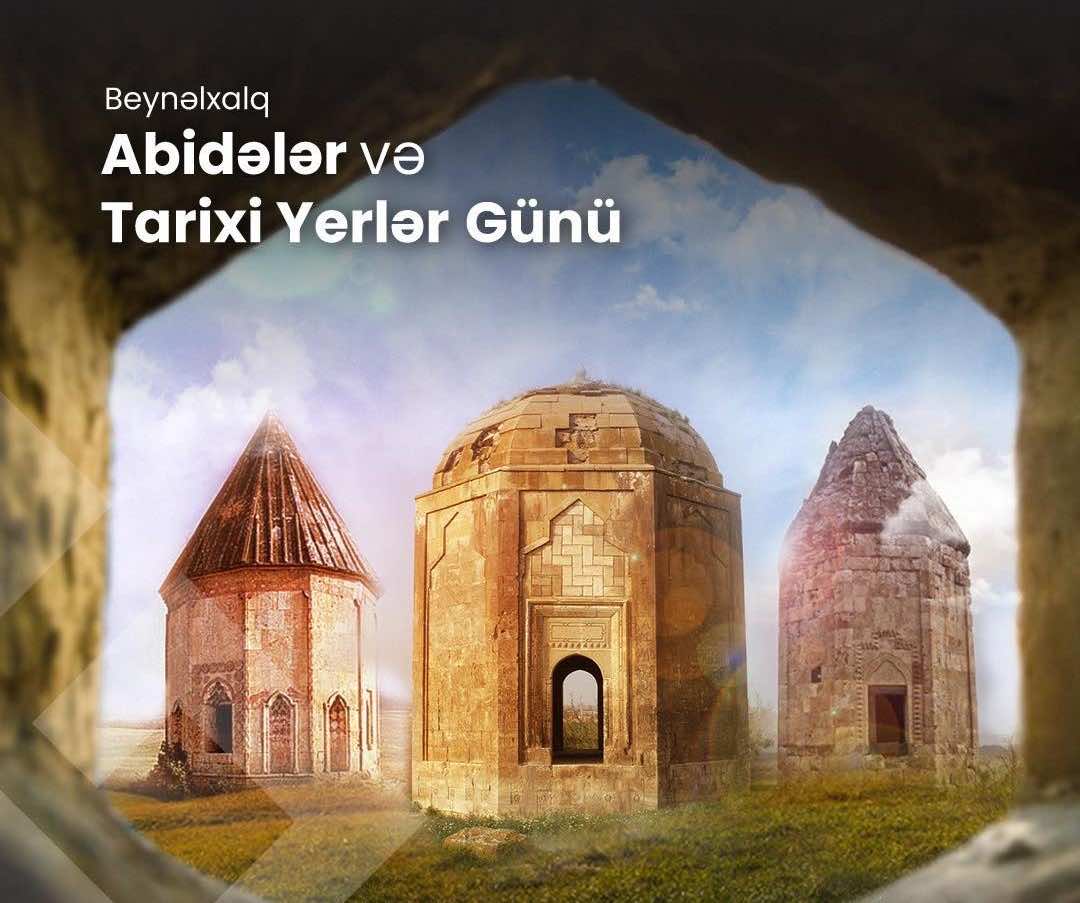
International Day for Monuments and Sites
April 18 is annually observed as the International Day for Monuments and Sites. This Day was established in 1983 by the Assembly of the International Council for the Protection of Monuments and Sites (ICOMOS), created by UNESCO. It aims to bring global attention to the need to conserve monuments and sites as our cultural heritage and to “celebrate the diversity of this heritage”. The International Council on Monuments and Sites (ICOMOS) is the advisory body of the UNESCO World Heritage Center and a non-governmental organization that works on preserving and conserving historical and archeological heritage sites worldwide. This significant day is widely celebrated in Azerbaijan.
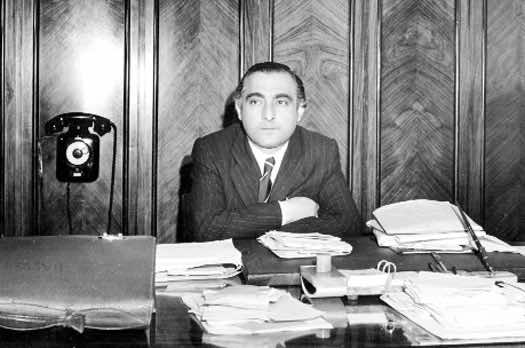
Writer, publicist, a statesman of Türkiye Samet Aghaoglu
Samed Ahmed Bey Aghaoglu was born on April 23, 1909, in Baku. Only a few months later, his family relocated to Turkey. He received his early education at Fevziye School in Istanbul. Following his family's move to Ankara, which had been declared Turkey's new capital, he attended a high school there. Despite his passion for literature and the arts, at his father's insistence, he enrolled in the Law Faculty at Ankara University (1926-1931), where he successfully completed his higher education. Afterwards, he pursued a master's degree at the University of Strasbourg but did not finish his studies. It was during this period that he began to explore his creative talents.