
The Presidential Library has presented a virtual book exhibition dedicated to 17 November – National Revival Day

17 November – National Revival Day, a pivotal stage in the Azerbaijani people’s struggle for freedom, is remembered as a historic turning point on the country’s path to independence. In the late 20th century, the weakening of the political and ideological pillars of the Soviet empire, the escalation of unjust territorial claims by Armenian separatism in Nagorno-Karabakh, the act of vandalism committed in Topkhana, and the mass rallies that began in Baku’s Freedom Square further strengthened the nation’s will for sovereignty. At the historic session of the Supreme Assembly of the Nakhchivan Autonomous Republic on 17 November 1990, chaired by National Leader Heydar Aliyev, the removal of the words “soviet” and “socialist” from the name of the autonomous republic and the restoration of the tricolour flag of the Azerbaijan Democratic Republic as a state symbol were recognized as major political and legal foundations of the national revival process.
The policy pursued by National Leader Heydar Aliyev since the Soviet era to safeguard national and spiritual values and to advance science and culture, along with the moral-psychological and economic foundation he established in the republic, played a decisive role in strengthening Azerbaijan’s statehood in the years of independence. His statement that “The Republic of Azerbaijan must follow the path of economic and political independence and strive for full sovereignty” reflected the strategic essence of the national liberation course and defined the nation’s future path of development. As this political line was consistently and resolutely continued by President Ilham Aliyev, Azerbaijan transformed into the leading state of the South Caucasus, and the Victory achieved in the 44-day Patriotic War of 2020 became the logical culmination of the path from national revival to national progress.
The virtual book exhibition “17 November – National Revival Day”, prepared by the Presidential Library on the occasion of National Revival Day, serves to facilitate a comprehensive scholarly examination of these historical processes. The publications presented in the virtual exhibition explore, from multiple perspectives, the ideological foundations of the Azerbaijani people’s struggle for freedom, the stages of the national revival movement, the role of Heydar Aliyev’s personality and political legacy in the history of statehood, the formation of the idea of Azerbaijanism, and the development path of the modern independent Azerbaijani state.
The exposition features scholarly and analytical works examining various periods of Azerbaijani history, the formation and evolution of statehood traditions, the ideological and political roots of national self-awareness and the liberation movement, the theoretical and practical foundations of modern state governance, as well as the historical and political significance of the Karabakh Victory. The literature presented in the exhibition provides readers with a consistent and systematic understanding of the historical essence of National Revival Day and the complex yet honorable path of Azerbaijan’s independence.
This virtual exhibition, presented by the Presidential Library, serves as an important digital resource for historians, researchers, students, and the wider readership, offering valuable material for studying the ideological and political foundations of the national liberation movement, the legacy of Heydar Aliyev, and modern Azerbaijani statehood.
Virtual Exhibition
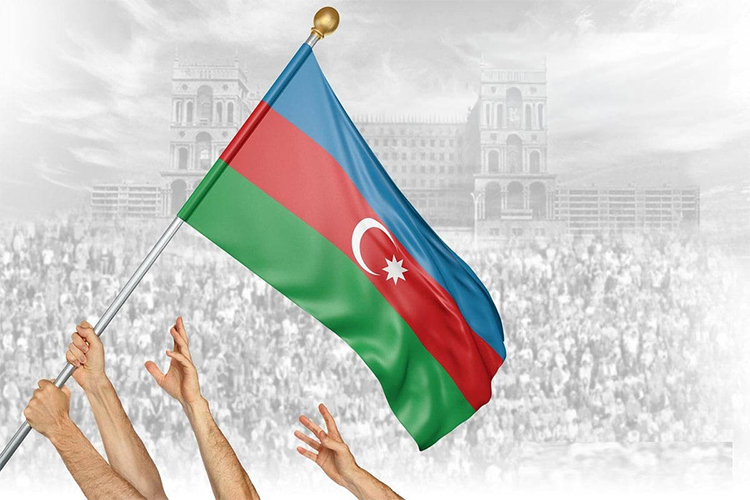
November 17 – National Revival Day
The virtual exhibition features books dedicated to November 17, National Revival Day. The exhibition showcases works that reflect the mass popular protests and the national liberation movement that began on…