
Art historian Mahammad Agaoghlu
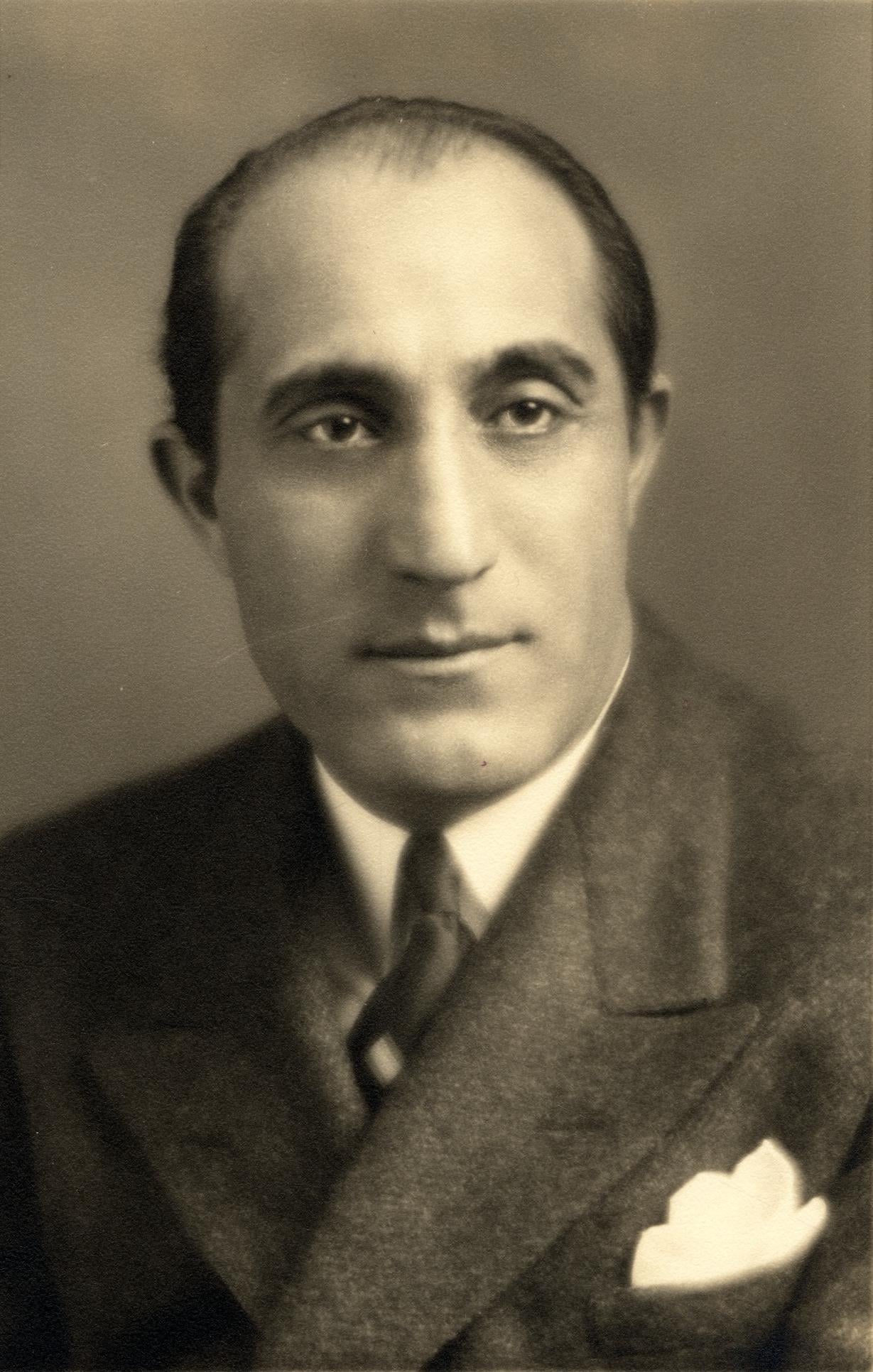 Mahammad Agaoghlu Agayev was born on August 24, 1896, in the city of Iravan, into an intellectual family. After receiving his primary education at a madrasa, he completed gymnasium education in 1912 and enrolled at the Faculty of Oriental Studies of Moscow State University the same year. There, he closely familiarized himself with ancient Eastern art and literary-philosophical thought, which fostered his scientific research interests.
After graduating from the university in 1916, Mahammad Agaoglu undertook extensive travels to various Eastern countries, including Türkiye, Turkistan, Iran, Iraq, Syria, and Central Asia for further academic research. These journeys significantly shaped his scholarly worldview and deepened his understanding of Eastern culture and Islamic art. In 1926, he completed additional studies at the Faculty of Oriental Studies at the University of Vienna, defended his doctoral dissertation in philological sciences, and subsequently moved to Baku.
During the period of the Azerbaijan Democratic Republic (1918–1920), Mahammad Agaoglu actively participated in public and cultural development, especially in the fields of museum studies and preservation of tangible cultural heritage. On his initiative, the "Istigbal" Museum was established in Baku, and he directly participated in founding archaeological and ethnographic societies. Additionally, the "Society for Protection of Ancient Monuments" was established as a result of his initiative and advocacy.
Following the fall of the Azerbaijan Democratic Republic in 1920, Agaoglu emigrated to Türkiye, where he continued his studies at Istanbul University. He further enhanced his expertise in Eastern languages and culture and stood out for his extensive linguistic skills. He mastered Azerbaijani, Persian, Arabic, Russian, English, French, German, Latin, and Greek. In 1926, he earned a Doctor of Philosophy degree.
Between 1927 and 1928, Mahammad Agaoglu served as the head of the Islamic Art Department at the National Museum in Istanbul and concurrently worked as an assistant professor of art at Istanbul University. During this period, he was also appointed acting director of the Museum of Turkish and Islamic Arts.
From 1929 until his death, Mahammad Agaoglu lived in the United States, where he continued his academic activities. At the Detroit Institute of Arts, he established the Department of Near Eastern Art and organized exhibitions rich with artifacts related to Islamic culture. On his initiative, the "Gallery of Islamic Art" was created at the institute and soon enriched with rare collections.
From 1933 to 1938, he headed the Department of Eastern Peoples' Culture at the University of Detroit. His scholarly research primarily focused on the study of art and architectural history of Azerbaijan, Türkiye, Iran, and Central Asian peoples. His investigations, especially into miniature art, carpet weaving, metalwork, and textile art, are considered among the most authoritative scholarly works in these fields.
Mahammad Agaoglu authored over fifty scholarly articles and studies published in prestigious academic journals across the United States and Europe. His notable works include "History of Islamic Art," "Book Printing in 15th Century Iran," and "Manufactures and Carpets of the Safavid Era," which remain essential sources in the study of Islamic and Azerbaijani art history. Additionally, he conducted detailed research on rare manuscripts and illustrations kept at the Topkapi Palace Museum and Freer Gallery, highlighting their artistic and historical value.
In 1934, he represented the Detroit Institute of Arts and the University of Michigan at the International Congress of Oriental Studies held in Tehran on the occasion of the 1000th anniversary of Firdovsi's birth. At the congress, he delivered important presentations aimed at advancing the study and promotion of Islamic art.
The same year, he founded the scholarly journal "Ars Islamica" ("Islamic Art") and served as its editor until the end of his life. The journal quickly became a significant academic source dedicated to Islamic art in the Western world.
Mahammad Agaoglu passed away on July 4, 1949, in Detroit, United States.
Recommended literature:
- Cabbarlı, Nikpur Mirhüseyn oğlu. Azərbaycan mühacirət nəsri /N. Cabbarlı ; elmi red. Ş. Alışanlı ; AMEA, Nizami adına Ədəbiyyat İn-tu. - Bakı: Elm və təhsil, 2011. - 138 s.
- Əhməd, Dilqəm. Mühacirlərin dönüşü : yeni fotolar və sənədlər / D. Əhməd ; red. Ə. Ş. Tahirzadə. I cild. - II nəşri. - Bakı : TEAS Press, 2017. - 140 s.