
Arif Narimanbeyov – A prominent representative of the Azerbaijani cinematography school
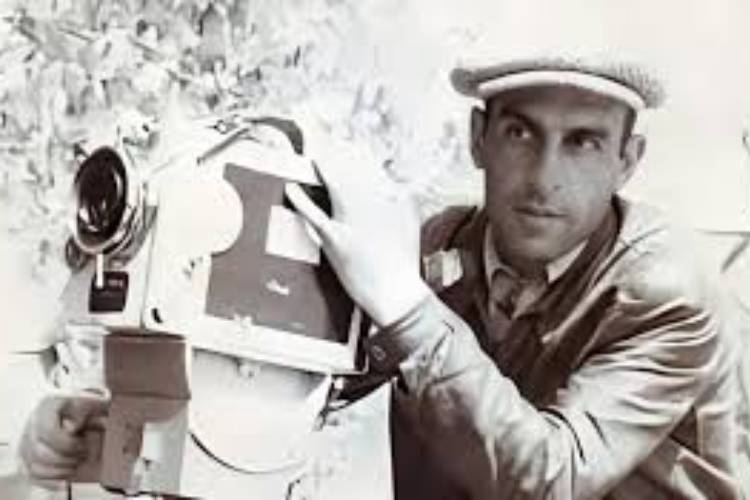 Arif Amirbey oghlu Narimanbeyov, a distinguished cinematographer and Honored Art Worker of Azerbaijan, holds a significant position in the history of Azerbaijani cinema. He is recognized for his unique creative style and high professionalism, establishing himself as one of the leading figures in national cinematography.
Arif Narimanbeyov was born in Baku on April 13, 1918, into an educated family. His father, Amirbey Narimanbeyov, served as the governor of Baku during the Azerbaijan Democratic Republic. However, in 1918, like many intellectuals of his time, he was brutally executed on Nargin Island.
Arif Narimanbeyov, who showed great interest in cinema, particularly in photo and film equipment, from his childhood, entered the Cinematography Faculty of the All-Union State Institute of Cinematography in Moscow after graduating from secondary school. He completed his studies near the end of World War II, in 1944, and began his career at the Baku Film Studio in the same year.
In the early stages of his career, the documentary filmmaker participated in filming "The Land of Eternal Fires" and "Victory Holiday" (1945). This period played a significant role in his professional development. In subsequent years, he further enriched his experience by working as a second cameraman on the films "Fatali Khan" (1947) and "The Lights of Baku" (1950). His collaboration with the prominent cinematographer Alisattar Atakishiyev on the film "Fatali Khan," directed by Yefim Dzigan, was a particularly important milestone in his creative development.
Arif Narimanbeyov's first significant success as an independent cinematographer was with the 1955 film "Bakhtiyar," directed by Latif Safarov. This collaboration continued in subsequent years, resulting in valuable contributions to Azerbaijani cinema, such as "Under the Scorching Sun" (1957) and "The Legend of Love" – "Leyli and Majnun" (1961).
His professionalism has attracted the attention of many prominent directors. Arif Narimanbeyov collaborated with renowned artists such as Arif Babayev, Shamil Mahmudbeyov, Hasan Seyidbeyli, and Eldar Guliyev. In particular, films with Hasan Seyidbeyli, such as "The Island of Miracles," "Our Teacher Jabish," and "Find That Girl," and with Shamil Mahmudbeyov, including "The Gypsy Girl," "Life Tests Us," "The Darvish Detonates Paris," and "When the Owl Comes," constitute a significant part of his creative achievements.
In addition to feature films, the cinematographer also had a productive career in documentary filmmaking, contributing to works such as "In the Gardens of Guba," "Morning Song," "Mingachevir," "Young Leninists," "Fertile Land," "Baku and the People of Baku," and "The Great Chemistry of Azerbaijan," among others. In total, his filmography includes approximately 50 screen productions.
Arif Narimanbeyov's work reflects various stages of Azerbaijani cinema's development. The films in which he worked as a cinematographer possess high value not only technically but also artistically and aesthetically. Through the cinematographer's camera, life events, social conflicts, and human destinies are presented colorfully and credibly.
His creative style is based on the principles of naturalness and realism. His approach to lighting and color solutions, the use of wide and expressive panoramas, compositional integrity, and precise angle selection are key characteristics of his artistry. At the same time, he is recognized as a master of portraiture, skillfully conveying the inner world and psychological state of characters to the viewer by paying special attention to the actor's physicality.
The screen language he created not only meets the artistic and aesthetic demands of the era but also makes the past vivid and understandable to modern viewers by uniting different time periods on the plane of visual memory.
Renowned cinematographer Arif Narimanbeyov passed away on May 16, 1992, after a serious illness. His extensive body of work continues to hold significant value today as a crucial milestone in the development of Azerbaijani cinema.
Recommended literature:
- Azərbaycan incəsənət tarixi : 5 cilddə. III cild : Kino : 1898-2018 / A. Ə. Kazımzadə. - Bakı : Şərq-Qərb, 2018. - 488 s.
- Kazımzadə, Aydın Ələsgər oğlu. Kino və zaman: 1923-2016 : Cəfər Cabbarlı adına "Azərbaycanfilm" kinostudiyasının yaradıcılıq yoluna həsr olunur /A. Ə. Kazımzadə ; red. A. İsmayıloğlu ; Azərb. Resp. Mədəniyyət və Turizm Nazirliyi. - Bakı: Şərq-Qərb, 2016. - 780 s.
- Кулибеков, Эдхем Абдулхалиг оглы. Киноискусство Азербайджана /Э. А. Кулибеков ; ред. Г. Наджафов, С. Мустафаева. - Баку: Азернешр, 1960. - 114 с.