
Qatran Tabrizi — a poet, linguist, and a prominent representative of court literature
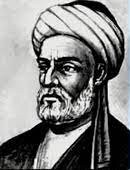 Qatran Tabrizi was an Azerbaijani poet recognized across the East and is considered the first notable figure of court literature. He was born in 1012 in the village of Shadiabad, located near Tabriz. His full name is Abu Mansur Qatran Jili Azerbaijani. Qatran received his initial education in Shadiabad before continuing his studies in Tabriz.
During that period, several feudal state structures were present in Azerbaijan, including the Shaddadid state, which had its capital in Ganja. Ganja emerged as a significant cultural center in the northern Muslim world during the height of the Arab Caliphate. The city was home to universities, schools, libraries, observatories, and medical centers. From Ganja, Muslim culture disseminated to the surrounding Christian states. Many scholars, poets, architects, and artists from various Eastern regions gathered in Ganja. Qatran also visited the city after acquiring his education. He was soon invited to the Shaddadid palace and quickly gained considerable influence. At that time, Abdulhasan Lashkari was the leader of the state, and Qatran dedicated a number of his poems to him and related events. These poems provide insights into the timeline of Qatran's life in Ganja. In one poem, Qatran describes the visit of Abu Mansur Wahsudan, the leader of the Rawwadid state, to Ganja as a guest of Abdulhasan Lashkari. Scholars who study Qatran's work suggest that this encounter may have occurred between 1035 and 1040. By 1042, the poet had experienced a significant earthquake in Tabriz that devastated half the city, indicating that he returned there before this disaster. However, some researchers propose that Qatran arrived in Ganja following the earthquake, leaving the possibility of his return to Ganja open. In 1046, Qatran met the renowned Iranian poet and philosopher Nasir Khusraw in Tabriz. Nasir Khusraw writes in his notable work, "Safarnama," about meeting a talented poet named Qatran.
After spending some time in Nakhchivan, in the courts of local leaders, Qatran returned to his hometown of Tabriz. During his lifetime, Qatran Tabrizi became recognized in various countries as a skilled poet, insightful philosopher, and scientist. He noted in his writings that he was well regarded and appreciated in Khorasan and Iraq.
Qatran is the author of the works "Tovsname," "Gushname," "Vamig and Ezra," and a significant divan that primarily consists of qasidas.
The 12th-century Central Asian poet Rashid al-Din Vatvat remarked that throughout his life, he recognized only one genuine poet, the physician and sage Qatran Tabrizi.
Qatran started writing poetry at a young age and found notable creative success in this area. His poetic work primarily consists of qasidas that praise various rulers of his time. These pieces are important for contemporary readers and researchers to explore and comprehend the historical events that took place in the courts of the figures he celebrated in his odes. For instance, Qatran Tabrizi's poems reflect several Oghuz campaigns to Azerbaijan, which are significant for today's understanding. Additionally, his poem about the Tabriz earthquake contributed to his recognition.
Azerbaijani researchers, drawing from medieval sources, indicate that Qatran Tabrizi is recognized as the author of the first explanatory dictionary of the Persian language in the context of Persian lexicography. This is documented by various authors, including Asadi Tusi (11th century), the poet and compiler of "Loḡat-e fors" ("Persian Dictionary"), and Muhammad ibn Hendushah Nakhjavani (13th century), the author of "Sihah al-Furs," among others.
Most medieval authors refer to this dictionary by the name of its creator as "Lughati-Qatran" or "Farhangi-Qatran," both meaning "Qatran's dictionary." Later, it was named "Tafasir fi lughat al-Furs," which translates to "Explanations of Persian Words," or simply "Tafasir," meaning "Explanations."
Qatran Tabrizi has left a significant mark on the history of poetry and lexicography of the Azerbaijani and Iranian peoples.
Qatran passed away in 1088 in Tabriz and was buried in the famous poets' cemetery in the Surkhab district.
Recommended literature:
- Sadıqova, Nigar Firuz qızı. Qətran Təbrizinin dövrü, həyatı, tarixi şeirləri : dərs vəsaiti / N. F. Sadıqova ; elmi red. R. Kamal ; Bakı Slavyan Universiteti. - Bakı : Class Print, 2024. - 164 s.
- Qasımov, Ramiz Asəf oğlu. Naxçıvan ədəbi mühiti : problemlər, perspektivlər / R. A. Qasımov ; elmi red. İ. Ə. Həbibbəyli ; AMEA Naxçıvan bölməsi. - Bakı : Elm və təhsil, 2018. - 232 s.
- Şair və yazıçılarımızın həyatından maraqlı anlar / tərt. M. Soltanov ; red. M. M. Əliyev. - Bakı : "AM 965" MMC, 2010. - 212 s.