
General Abdulhamid bey Gaytabashi
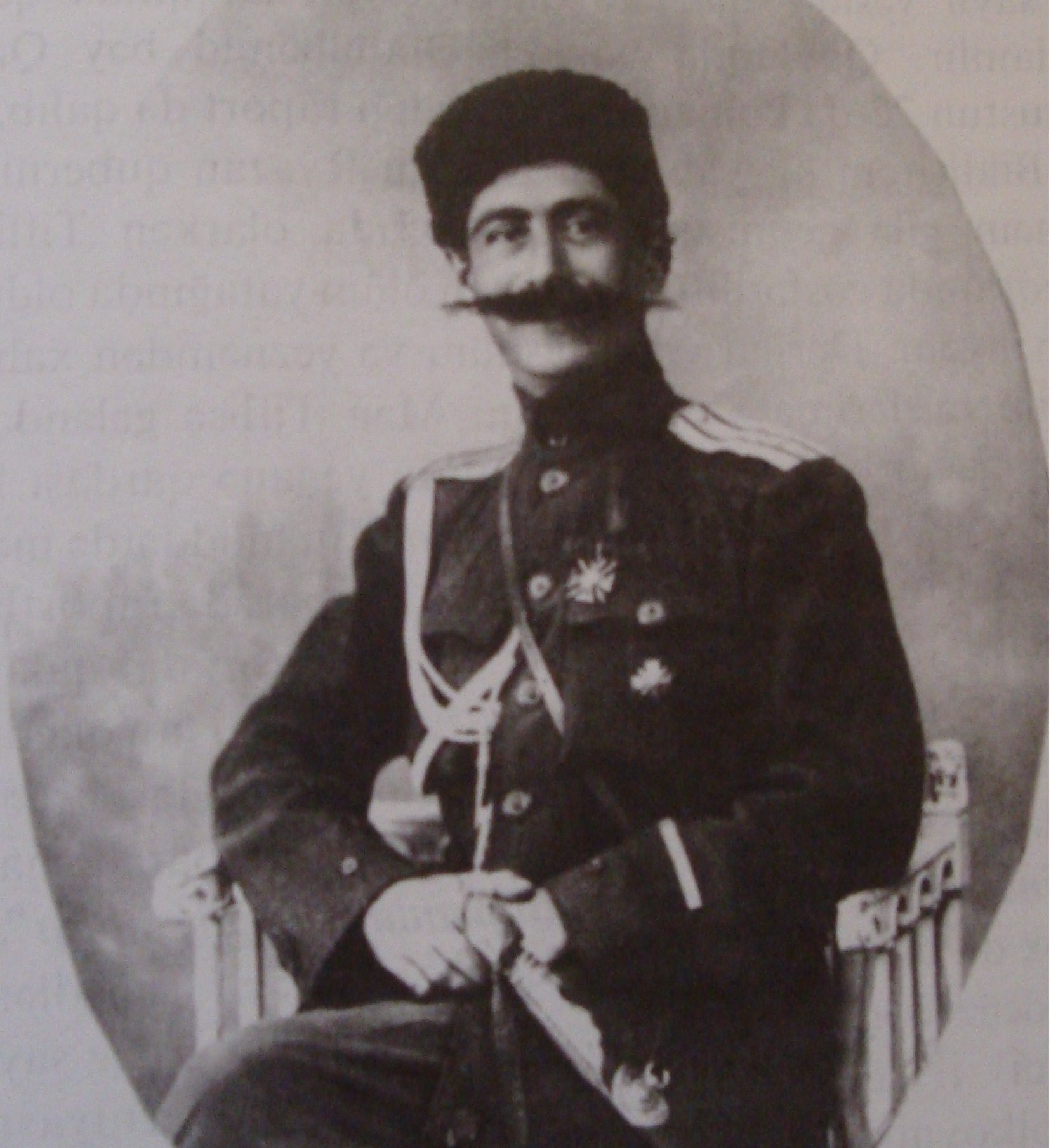 Abdulhamid bey Sharif bey oghlu Gaytabashi was born on July 10, 1884 in the city of Tiflis, into a military family. His father, Lieutenant Colonel Sharif bey Gaytabashi, served in the Tsarist army and was awarded the Order of St. Vladimir, the Order of St. Anna, and the Order of St. Stanislaus. Sharif bey also worked as a translator for Eastern languages in the Russian army. The roots of the Gaytabashi family trace back to the 18th century. Abdulhamid bey Gaytabashi’s great-grandfather, Abdulmajid bey, migrated from Istanbul to Tiflis in the late 1700s. After settling there, he began serving in the Tsarist Russian army. Prior to this, he had served in the Ottoman army as a regimental commander, a position then referred to as “Haytabashi” (“Head of the Guard”). It was for this reason that Abdulmajid bey adopted the surname “Haytabashi”. However, after relocating to Tiflis, the surname was adjusted to conform to Russian phonetics and began to be used in the form “Gaytabashi”.
Abdulhamid bey received his primary education in Tiflis. In 1908, he graduated from the Pavlovsk Military School, one of the prestigious military educational institutions of the Russian Empire, with the rank of “podporuchik” (second lieutenant). He began his military service in the 261st Shamakhi Reserve Infantry Regiment stationed in Ganja.
During World War I, he served in the 205th Shamakhi Regiment of the 52nd Infantry Division, which was part of the 3rd Caucasus Army Corps. For his bravery in combat, he was awarded several medals. Specifically, in May, 1914 he was decorated with the Order of Saint Anna, 3rd Class; in February, 1915 with the Order of Saint Vladimir, 4th Class; and with the Order of Saint Anna, 4th Class inscribed “For Courage”. On October 5, 1914, he was severely wounded near the village of Dembnyak.
In 1918, during the formation of Azerbaijan’s national military units, Abdulhamid bey was assigned to leading positions. On March 6, 1918, he was appointed Chief of Staff of the Muslim Corps, and on March 18, by decree of the Transcaucasian Commissariat government, he was promoted to the rank of “polkovnik” (colonel). In August 1918, he began service at the headquarters of the Caucasus Islamic Army and played a direct role in organizing the first regular army of the Azerbaijan Democratic Republic during its struggle for independence.
On November 15, 1918, by order of General Samad bey Mehmandarov, Abdulhamid bey was appointed to serve as Acting Duty General of the General Staff, retaining his rank of polkovnik (colonel).
Within a short period, in consideration of his professionalism, organizational skills, and administrative-military aptitude, by Decision No. 28 dated June 25, 1919 of the Chairman of the Council of Ministers and Order No. 320 dated July 9, 1919 of the Minister of War, he was awarded the military rank of “general-mayor (infantry)” and was officially confirmed in the position of Duty General of the General Staff.
For the purpose of improving the army’s structure and administrative-legal foundations, pursuant to Order No. 506 dated October 30, 1919 of the Minister of War, he was selected as a member of the commission responsible for preparing new staffing tables for the Ministry of War and subordinate military units, as well as standardizing military uniforms. Subsequently, by Order No. 568 dated December 10, 1919 of the Minister of War, he was temporarily assigned to perform the duties of Chief of the General Staff, with corresponding authorities and remuneration. Finally, by Order No. 105 dated February 17, 1920 of the Minister of War, he was appointed as a member of the commission established for the reorganization of the General Staff.
As a continuation of organizational-staffing reforms, pursuant to Order No. 128 dated March 2, 1920 of the Minister of War, the Main Staff Directorate and the General Staff were consolidated, with this merger taking effect from March 1, 1920 onward. From that date, Abdulhamid bey was officially confirmed in the position of Duty General of the Army Staff.
Until the collapse of the Azerbaijan Democratic Republic, he remained in active military service as Duty General of the Army Staff with the rank of General-Major, fulfilling critical strategic and organizational functions in the establishment of the national army.
Following the Soviet occupation, Abdulhamid bey temporarily served as acting Chief of Staff of the Azerbaijani army for approximately one month. However, in June 1920, he was arrested in connection with the Ganja uprising and subsequently exiled to Nargin Island, where he was executed by firing squad. His burial site remains unknown to this day.
Abdulhamid bey was a family man. His marriage to Sara khanum, daughter of Mashadi Mahmud, produced two children - Latif and Khadija. His life, exemplary officer conduct, organizational skills, and steadfast dedication to the military arts left a distinguished mark on the military history of the Azerbaijan Democratic Republic.
Abdulhamid bey Gaytabashi is recognized in Azerbaijan’s military history as a strategic thinker and progressive military leader of his era. His brief yet consequential life, steadfast patriotism, and resolute service left an indelible mark on the formation of Azerbaijan’s national statehood.
Recommended literature:
- Nəzirli, Şəmistan Əmiraslan oğlu. Cümhuriyyət generalları /Ş. Nəzirli; Rəyçi: Ç. Məmmədov; Red.: R. Faxralı. - Bakı: Hərbi, 1995. - 212 s.
- Nəzirli, Şəmistan Əmiraslan oğlu. Güllələnmiş Azərbaycan generalları : portretlər, oçerklər, məqalələr, hekayələr / Ş. Ə. Nəzirli ; red. M. S. Süleymanov. - Bakı : Qələm, 2016. - 704 s.
- Şahbazov, Atamalı. Azərbaycan Xalq Cümhuriyyəti ordusunun zabit və hərbi məmurları : tarixi oçerklər / A. Şahbazov ; ön sözün müəl. M. S. Süleymanov ; Azərbaycan Respublikası Silahlı Qüvvələrinin Hərbi Akademiyası. - Bakı : Maarif, 2020. - 816 s.
- Назирли, Шамистан Амраслан оглы. Расстрелянные генералы Азербайджана / Ш. А. Назирли ; пер.: Р. Бабаева, М. Мамедова, Э. Шарифова-Сейшельского ; авт. предисл. Ч. Мамедов ; ред. Ш. Рустамов. - Баку : Bizim kitab, 2015. - 576 с.