
Veli bey Yadigarov, a prominent military figure of Azerbaijan
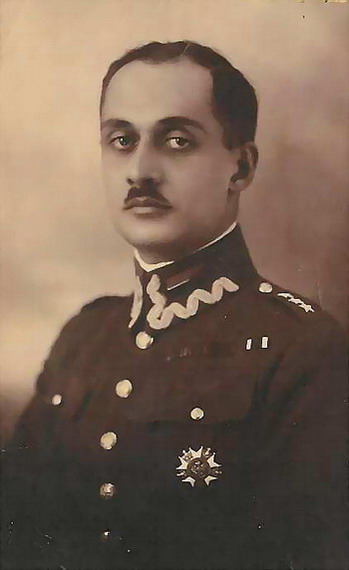 One of Azerbaijan’s prominent military figures, Veli bey Sadig bey oghlu Yadigarov, was born on October 31, 1898, in the village of Tekali in the Borchali district of the Tiflis Governorate, into a noble family. His father Sadig bey, who was related to the renowned Azerbaijani orientalist Mirza Jafar Topchubashov, enrolled his sons in military schools. Veli bey’s mother was Olga Koruchibasheva (also spelled Koruchubashiyeva), a Crimean Tatar by ethnicity but born in Poland. In 1909, Veli bey was admitted to the Tiflis Military Gymnasium, where he studied until 1916.
From 1916 onwards, Veli bey began serving in the Cavalry units of the Separate Caucasus Corps of the Russian Empire. As a young cornet, he was sent to the Caucasus Front during World War I and participated in the renowned Brusilov Offensive. After a period of service in the 1st Dagestan Cavalry Regiment, he was sent to the Artillery Officers’ School. However, following the Bolshevik coup in Petrograd and the subsequent collapse of the Russian Empire, the military structure fell into disarray. Throughout the country, Bolshevik forces established checkpoints and executed former Imperial officers. Enduring great hardship, Veli bey managed to reach Azerbaijan in September 1918.
The Yadigarov family welcomed the establishment of the Azerbaijan Democratic Republic and contributed actively to the national cause — eight officers from the family served in the National Army. Among them was Veli bey’s elder brother, Davud bey, who was awarded the rank of Major General in 1919 for his bravery in the Karabakh and Zangezur battles. Upon his arrival in Azerbaijan, Veli bey also expressed a desire to serve in the National Army and joined the newly formed 3rd Sheki Cavalry Regiment as a squadron commander.
With a detachment of the 3rd Sheki Cavalry Regiment, Veli bey fought his way into Georgian territory, continuing resistance against the Bolsheviks until March 1921. He then emigrated to Turkey, and in the autumn of 1922, moved to Romania, and later settled in Poland.
Between 1924 and 1925, he studied at the Central Cavalry Officers’ School of the Polish Army in Grudziądz. From 1925, he served in the operations department of the Armia Krajowa (AK – the Polish Home Army) and commanded the 4th Squadron of the 10th Cavalry Regiment in Łańcut.
He later graduated with distinction from the Polish Higher Military Academy, receiving the rank of “rotmistrz” (captain of cavalry) and was assigned to the cavalry headquarters in Baranowicze in 1932.
In 1933, he authored a book in Warsaw titled “A Historical Sketch of the Tatar-Uhlan Regiment Named After Mustafa Akhmatovich”, which documented the service of Muslims from Poland, Crimea, Lithuania, and Russia in the Polish military. The book was republished in Warsaw in 1990. In 1936, he was appointed deputy commander of the 7th Lublin Uhlan Regiment.
In 1938, Veli bey married Wanda Eminowicz, with whom he had a daughter named Zuleikha (born in 1942).
During the German invasion of Poland in September 1939, he served as Chief of Staff of the Mazowiecki Cavalry Brigade while also teaching at the Polish Military Academy. A large portion of the Polish Army was captured, including Veli bey. However, because he was not ethnically Polish, he was released by the Germans in 1940 as an “Ausländer” (foreigner).
Upon returning to Warsaw, he did not abandon the struggle. Reuniting with former comrades from the 7th Lublin Uhlan Regiment, he formed the secret “Jeleń” (Deer) Regiment, affiliated with the Armia Krajowa. During these years, Veli bey, operating under the codename “Damazy” and his wife Wanda participated in covert operations supporting the resistance.
From 1942, he held the rank of Lieutenant Colonel and headed the Cavalry Directorate of the General Staff of the Internal Forces. He took part in organizing the Warsaw Uprising of 1944. In the spring of 1945, as a full Colonel, he was dispatched to the headquarters of General Anders’ 2nd Corps in Italy.
Having fought valiantly for his second homeland, Poland, Veli bey refused to submit to the Soviet forces that entered Poland in 1945. He submitted his resignation and emigrated to Argentina in 1949, where he became an active member of the Polish and Caucasian émigré communities, residing there until his death.
He passed away on December 13, 1971, in Buenos Aires. Prior to his death, he requested to be buried in Poland. The Polish state honored his wishes, and in 1990, the remains of both Veli bey and his wife were reinterred in the Muslim-Tatar Cemetery in Warsaw. The funeral was held with full military honors, including a guard of honor, military orchestra, and a gun salute.
In tribute to his legacy, the Polish government had the inscription “Ostatni książę Borçalo” (“The Last Prince of Borchali”) engraved on his tombstone. Throughout his distinguished military career, Veli bey Yadigarov was awarded the Azerbaijani “Medal of Valor” and four Polish military decorations.
A courageous commander who fought for freedom until his last breath, and a compatriot who introduced Azerbaijan to Europe, Veli bey Yadigarov’s name is eternally inscribed in the annals of Azerbaijani history.
Recommended literature:
- Nəzirli, Şəmistan Əmiraslan oğlu. General Yadigarov qardaşları /Şəmistan Nəzirli; Red: Anar İsabəyli. - Bakı: Şirvannəşr, 2004. - 36 s.
- Nəzirli, Şəmistan Əmiraslan oğlu. Güllələnmiş Azərbaycan generalları : portretlər, oçerklər, məqalələr, hekayələr / Ş. Ə. Nəzirli ; red. M. S. Süleymanov. - Bakı : Qələm, 2016. - 704 s.
- Нәзирли, Шәмистан Әмираслан оғлу. Азәрбајҹан ҝенераллары / Ш. Ә. Нәзирли ; ред. Т. Мухтарова. - Бакы : Ҝәнҹлик, 1991. - 204 с.