
Renowned film director and cinematographer Mukhtar Dadashov
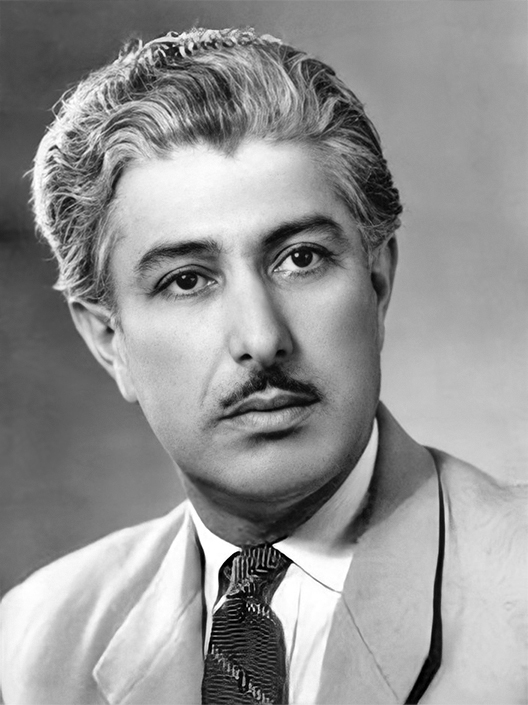 Renowned director and People's Artist Mukhtar Baba oghlu Dadashov was born on September 11, 1913, in Baku. Mukhtar Dadashov, who developed an interest in art from a young age, first performed on the stage of the Azerbaijan State Academic Drama Theater at the age of 11 in 1924. In 1928, he played the role of Gunduz in the inaugural performance of Jafar Jabbarli's play "Sevil." He started working as an assistant director and lead actor at the Young Spectators Theater in 1929.
In 1931, Mukhtar Dadashov, who worked as an assistant cameraman at a film studio, began making documentary and feature films. In 1933, he traveled to Moscow to study cinematography. During his studies, he also worked as an actor, portraying a Komsomol member in the feature film "Living God" by the renowned Russian director M. Verner. After finishing his education, he returned to the film studio and continued working as a cameraman.
Mukhtar Dadashov began his career in films as a cameraman. He served as the cinematographer for the feature film "Dancing Turtles" (1935), which was based on the story "The Playing Turtle" by Abdulla Shaig. His camera work brought to life the feature films "Peasants," "New Horizon," "Son of the Motherland," and "Submarine T-9."
Mukhtar Dadashov served as the artistic director of the Documentary Films Union at the “Azerbaijanfilm” studio named after Jafar Jabbarli from 1977 to 1983. His body of work prominently featured historical documentaries. Significant social and political events of the era formed the central themes of the documentaries he filmed. The director was also the screenwriter for many of these documentaries. To bring the films to life, the distinguished artist conducted extensive research and gathered rich materials from archives.
Mukhtar Dadashov, known for his significant contributions to the wartime newsreels production, was assigned to a commission investigating Nazi crimes in 1943. Alongside his assistant Ismayil Afandiyev, he filmed evidence of the atrocities committed by the fascists. These films were later presented as evidence at the Nuremberg Trials.
In 1943, he directed a documentary film about the war titled "Baku is Fighting." This film featured prominent figures such as Samad Vurghun, Uzeyir Hajibeyli, chemist Yusif Mammadaliyev, and oilmen G. Aliyev, A. Nematulla, and R. Rustamov, among others. The footage from this film holds special significance as rare documentary episodes of our national cinema.
Dadashov's 1974 film "Winds are Blowing in Baku" is another valuable work focused on the Great Patriotic War. In this film, the talented director skillfully portrays the heroism demonstrated by our people on both the home front and the battle lines, highlighting the vigilance of security agencies in exposing spies and preventing potential explosions of Baku's oil fields through their courageous efforts.
His works have been showcased not only in Azerbaijan but also in numerous countries worldwide. Mukhtar Dadashov was the first Azerbaijani director to receive a special prize at the Cannes International Film Festival in 1951 for his film "Soviet Azerbaijan." He was awarded a gold medal at the All-Union Film Festival in Moscow in 1956 for "By Happiness," a special prize at the Tbilisi Festival in 1967 for "Nariman Narimanov," and the State Prize in 1980 for his documentary "L.I. Brezhnev in Baku."
Mukhtar Dadashov skillfully celebrated the mystical nature of his homeland and its historical figures through the art of cinema in his films. Notable works include "Orderly Azerbaijan" (1938), "Baku is Ready!" (1940), "Samur-Davachi Channel" (1940), "Victory Day" (1945), "Morning Song" (1950), "On the Shores of Araz " (1953), "Dreams Come True" (1954), "Masters of White Gold" (1958), "Native Land, Azerbaijan" (1960), "Sabir" (1962), and "Kura" (1963), among others.
Mukhtar Dadashov's directorial debut was "For the Sake of the Law," for which he also wrote the screenplay. The film is based on the story "Mehman" by People's Writer Suleyman Rahimov. North Ossetian actor Bimbulat Vatayev played the lead role in the screenplay, and many notable Azerbaijani artists, including Adil Isgandarov, Rza Tahmasib, Mustafa Mardanov, Najiba Malikova, and Nasiba Zeynalova, also participated in the film.
Mukhtar Dadashov's artistic contributions were highly valued; he received the honorary titles of Honored Art Worker in 1960 and People's Artist in 1976. In 1993, he was awarded the Honorary Diploma of the Republic of Azerbaijan, followed by the Shohrat Order (Order of Glory). Mukhtar Dadashov died on May 7, 1998.
Recommended literature:
- Sadıxov, Nazim. Azərbaycan kino rejissorları: Portretlər /N. Sadıqov ; red. S. İsmayılova ; rəyçi. F. Səfiyev. - Bakı: İşıq, 1988. - 157 s.
- Kazımzadə, Aydın Ələsgər oğlu. Azərbaycan kinematoqrafçıları / A. Ə. Kazımzadə ; bur. məsul C. B. Quliyev ; red. Ş. Bürcəliyeva ; Azərbaycan Respublikası Mədəniyyət və Turizm Nazirliyi, Azərbaycan Dövlət Film Fondu. III bur. : Portretlər. - Bakı : Təhsil, 2012. - 224 s.
- Kazımzadə, Aydın Ələsgər oğlu. Kino və zaman: 1923-2016 / A. Ə. Kazımzadə ; red. G. İsmayıloğlu ; Azərbaycan Respublikası Mədəniyyət və Turizm Nazirliyi. - Bakı : Şərq-Qərb, 2016. - 784 s.