
Prominent Director Latif Safarov
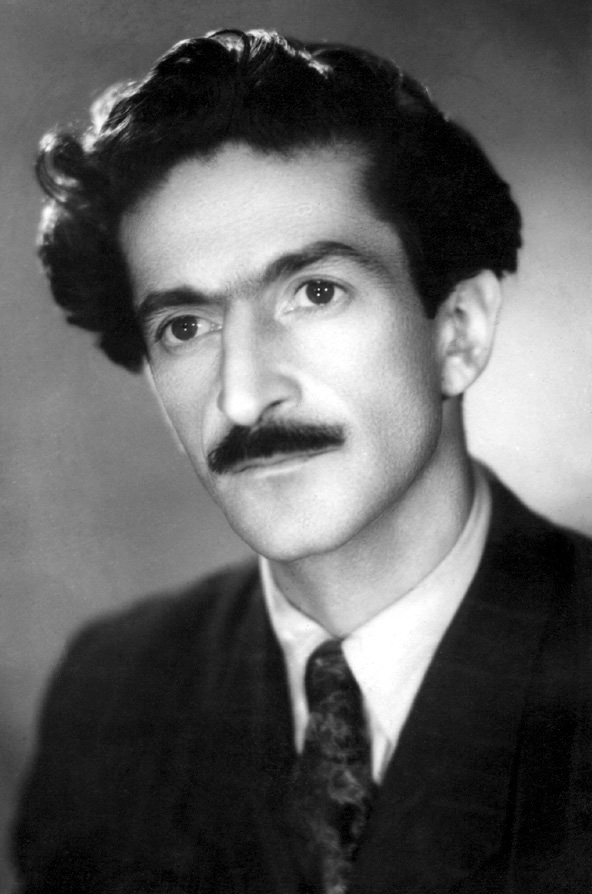 Latif Bashir oghlu Safarov was born on September 30, 1920, in Shusha. At the age of seven, he appeared in director Leo Mur’s film “The Girl from Gilan” (“Bronze Moon”, 1928). Later, together with the creative team and particularly due to director M. Mikayilov’s efforts, he came to Baku and was accepted onto the studio staff. He played child roles in the films “Sevil” (1929), “Latif” (1930), “Towards the East” (1930), and “The Golden Bush” (1930). In 1931, he entered the Ganja Pedagogical Technical School and studied part-time. He worked in the dubbing department of the film studio and later served as an assistant director in films. As an actor, he participated in the dubbing of famous Soviet films such as “Chapaev”, “Lenin in October”, “We are from Kronstadt”, “Lenin in 1918”, and others. In 1940, he was admitted to the All-Union State Institute of Cinematography in Moscow, where he studied the art of filmmaking under the renowned Russian film director Grigori Kozintsev. A year later, with the outbreak of war, he joined his colleagues in constructing defense lines in the Smolensk region and worked briefly at Mosfilm. When the institute was relocated to the rear in Alma-Ata, he discontinued his studies and returned to Azerbaijan, to his mother in Barda.
Due to health issues, he was deemed unfit for military service and was appointed a military inspector at the civilian education department of the Barda district. In 1946, he returned to Moscow and resumed his education. As a model student-director, he participated in the filming of his teacher’s movie “Pirogov” during his years at the institute. He also filmed the cine-essay “Response to the Call”, which portrayed the work of cotton grower and labor hero Surayya Karimova and her brigade. His diploma work, the documentary “Builders of a New Life”, about the lives of workers at the “Iskra” kolkhoz in Astara district, received an excellent evaluation. He graduated in 1950 and returned to Baku as a professional cinematographer, beginning work at the film studio. He co-directed “Lights of Baku”, a joint work by directors I. Kheifits, A. Zarkhi, and R. Tahmasib, and, with K. Babayev and T. Akhundov, made the documentary “The Wealth of Gadabay”. He then created a series of documentaries including “Young Leninists”, “Azerbaijani Border Guards”, “In the Orchards of Guba”, “Children of Baku,” and “Spark”, as well as film journals “Decorated Azerbaijan” and “Young Generation”, and story segments for the Central Chronicle Studio in Moscow.
In 1955, he was entrusted with directing the film “Beloved Song” (“Bakhtiyar”), which marked his debut in major cinema. With films like “Under the Scorching Sun” (1957) and “Leyli and Majnun” (1961), Latif Safarov brought a new breath to Azerbaijani cinema and managed, at least partially, to realize his theoretical views on the aesthetic function of cinema. His film “Leyli and Majnun”, shown during the cinema days held in Ganja and Baku in November 1962, was positively received by audiences.
From 1958 to 1963, Latif Safarov was the first chairman of the Union of Cinematographers of Azerbaijan.
The prominent director Latif Safarov committed suicide by shooting himself with a hunting rifle on December 9, 1963.
Recommended literature:
- Kazımzadə, Aydın Ələsgər oğlu. Azərbaycan kinematoqrafçıları / A. Ə. Kazımzadə ; bur. məsul C. B. Quliyev ; red. Ş. Bürcəliyeva ; Azərbaycan Respublikası Mədəniyyət və Turizm Nazirliyi, Azərbaycan Dövlət Film Fondu. III bur. : Portretlər. - Bakı : Təhsil, 2012. - 224 s.
- Kazımzadə, Aydın Ələsgər oğlu. Heydər Əliyev və kinematoqraf /A. Ə. Kazımzadə ; elmi red. A. Dadaşov ; red. M. Bəyişli ; rəyçi A. Məmmədov, Ş. Vəliyev ; Azərb. Resp. Mədəniyyət və Turizm Nazirliyi, Azərb. Dövlət Film Fondu. - Bakı: "Apostroff" MMC, 2011. - 211 s.