
Baku Free Criticism and Propaganda Theater
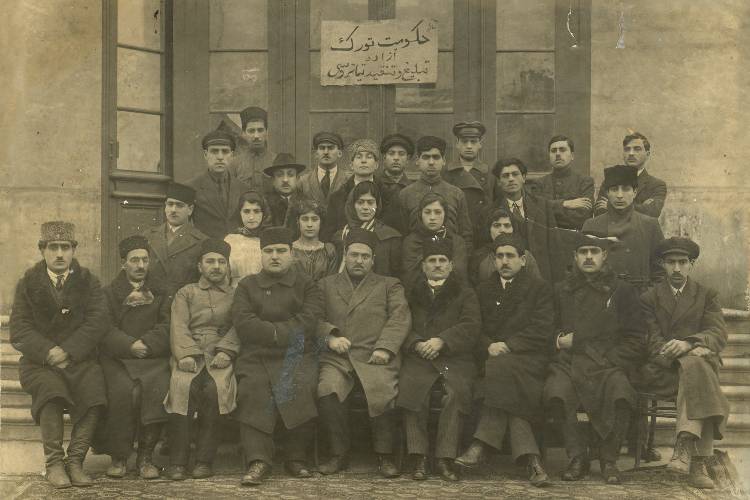 The "Free Criticism and Propaganda" theater was established on November 13, 1921, and currently operates under the name Azerbaijan State Academic Russian Drama Theater. This theater has distinguished itself in the history of Azerbaijani culture not only as an artistic venue but also as a symbol of the new order, contributing to the formation of a new generation of theaters.
In the late 19th century, the most active Russian theater group in Baku was led by Polonski. This theatrical collective consisted of a stable repertoire, a rich variety of props and costume workshops, and numerous ready-made set designs. The troupe performed at the Taghiyev Theater until 1921. However, following a fire at the Taghiyev Theater in 1918, the troupe was forced to cease operations and subsequently disbanded.
In 1920, the "Yarasa" theater arrived in Baku from Russia for a tour. The tour was interrupted in April due to the Red Army's annexation of Azerbaijan, resulting in the disbandment of the theater group. Some members chose to remain in Baku. Consequently, they collaborated with local actors to establish the "Free Criticism and Propaganda" theater, which aimed to promote Soviet ideology. The creative foundation of this theater was strictly based on ideological themes. The performances showcased progressive and optimistic characters while criticizing illiteracy, fanaticism, women's rights issues, and religious backwardness. The theater acted as a "living newspaper," fulfilling an educational mission by bringing current events to the stage. Not only did the theater perform in Baku, but it also organized tours in various regions to educate the public. Performances were staged in factories, schools, and collective farms. The initial repertoire included short sketches such as "Lenin's Rhapsody," "Parrot," and "Carousel." One of the main achievements of this theater was its ability to establish direct dialogue with the audience. The repertoire primarily focused on revolutionary heroism, symbols of labor, and themes of class struggle, promoting socialist values such as education, enlightenment, and class equality, while criticizing the dark and outdated values of the past, including ignorance and illiteracy.
The theater has been operating since 1923 under the name Baku Workers' Theater (BWT). In 1930, the theater was awarded the Order of the Red Banner. Gradually, the creative characteristics of the theater changed, leading to an expansion of themes and genre exploration. Since 1937, it has been known as the Azerbaijan State Russian Drama Theater. In 1956, the theater was named after Samad Vurghun.
Throughout its creative journey, ASRDT has had a diverse and rich repertoire. Productions of famous works by world classics, performances of Russian classics, as well as contemporary dramas by Russian playwrights, and plays by classical and modern Azerbaijani playwrights have been staged.
Currently, the theater stage features works by world classics, as well as Azerbaijani writers. The theater's repertoire includes L. Gershe's "Butterflies Are Free," Elchin's "Citizens of Hell," W. Shakespeare's "King Lear," J. Anouilh's "The Lark," A. Chekhov's "The Seagull," L. Razumovskaya's "Marriage Agency '1+...'," M. Ibrahimov's "Your Excellency Rolls-Royce," and V. Neverov's "Guess a Fairy Tale."
Famous actors such as Fuad Poladov, Nodar Shashigoglu, Haji Murad Yagizarov, Mabud Maharramov, and Lyudmila Dukhovnaya have worked at the theater. The theater produces performances not only for adults, but also for children.
On March 5, 2019, the President of the Republic of Azerbaijan signed a decree granting the Azerbaijan State Russian Drama Theater the status of "academic."
The "Free Criticism and Propaganda" theater marked a significant milestone in the development of both political ideology and national theatrical art in the history of Soviet-era Azerbaijani theater. This theater was moved to Ganja in 1932, laying the foundation for the Ganja State Drama Theater.
Today, the Azerbaijan State Academic Russian Drama Theater, through its provision of significant services, functions as a vital cultural center that both preserves the traditions of the Russian theater school and influences Azerbaijan's cultural scene. The theater adapts to the challenges of the modern era by supporting intercultural relations and promoting tolerance within the country.
Recommended literature:
- Rəhimli, İlham Əziz oğlu. Azərbaycan teatr tarixi : 5 cilddə / İ. Ə. Rəhimli. II cild. - Bakı : Şərq-Qərb, 2017. - 536 s.
- Kərimov, İnqilab Saleh oğlu. Sovet Azərbaycanının gənclər teatrı/İ. S. Kərimov ; red. C. Cəfərov ; AzSSR EA, Memarlıq və İncəsənət İn-tu. - Bakı: AzSSR EA, 1969. - 172 s.
- Azərbaycan teatr antologiyası: 2 cilddə / Azərbaycan Respublikası Mədəniyyət və Turizm Nazirliyi; red. heyəti: A. P. Nemət [et al.] ; tərt. İ. Ə. Rəhimli ; elmi red. Ə. Vəliyev ; layihənin rəh. Ə. M. Qarayev. I cild. - Bakı : n. y., 2013. - 597 s.