
Restoration of Azerbaijan’s Economic Integrity: Karabakh and Eastern Zangazur
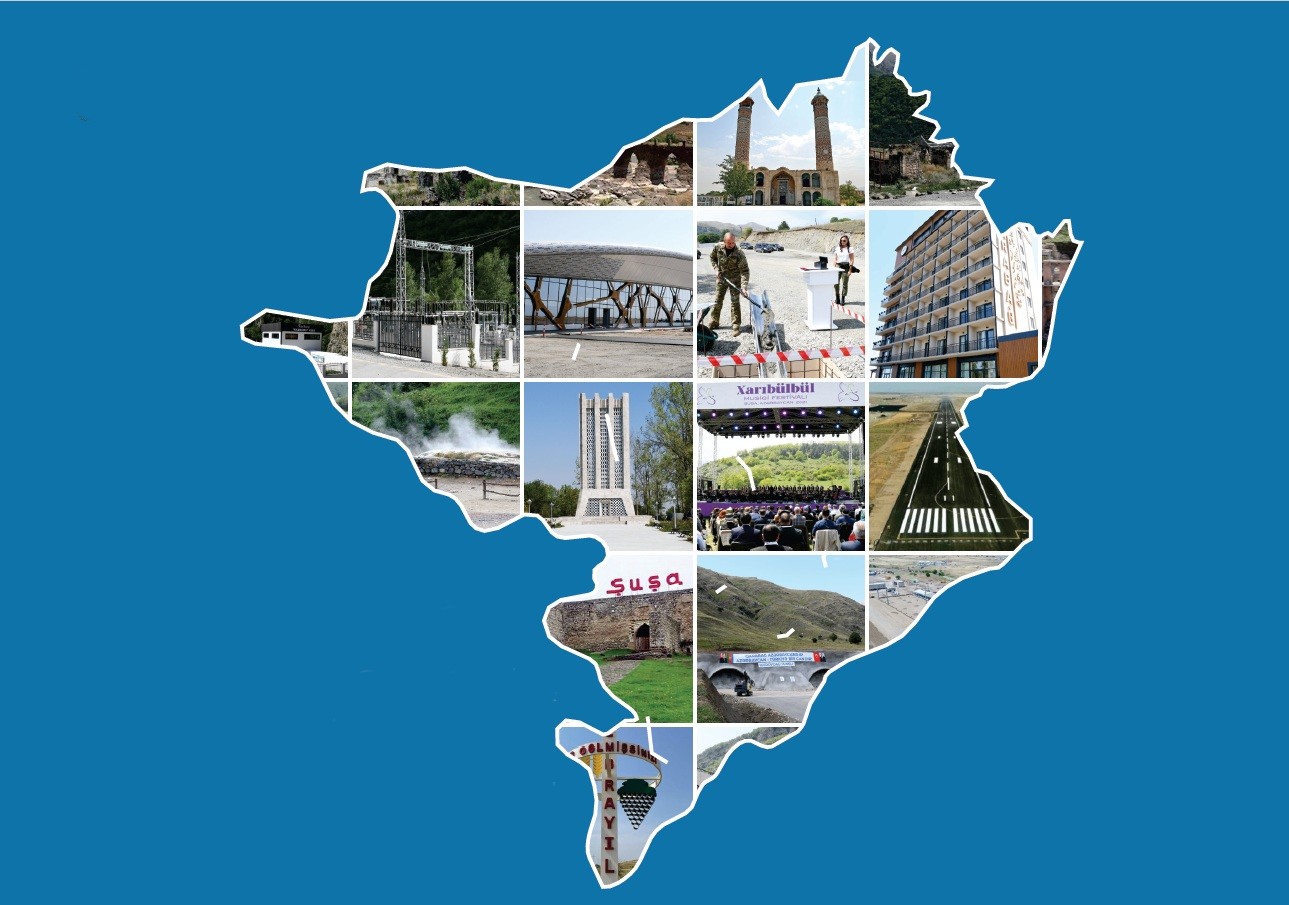 Through the July 7, 2021 Decree “On the New Division of Economic Regions in the Republic of Azerbaijan” issued by President Ilham Aliyev of the Republic of Azerbaijan, the country’s economic-geographical map was redrawn. This Decree is not merely an administrative-economic zoning document, but also serves as a strategic guide for comprehensive political, economic and social approaches to the liberated territories. The new zoning model represents both a logical continuation of systematic governance reforms implemented during Azerbaijan’s independence period and a response to the challenges of the post-war era.
At the heart of this reform lies the establishment of the Karabakh and Eastern Zangezur economic regions. These very territories have become the starting point of a new phase of economic development following the restoration of Azerbaijan’s territorial integrity. The aforementioned economic regions represent not merely subjects of strategic planning, but central pillars of Azerbaijan’s geopolitical will, historical justice, and future state policy.
The Karabakh Economic Region encompasses the city of Khankendi and the districts of Aghjabadi, Aghdam, Barda, Fuzuli, Khojaly, Khojavend, Shusha, and Tartar. The reintegration of this region into economic circulation holds decisive importance not only for local population welfare but also for the macroeconomic development of the entire country. Karabakh’s fertile lands, agricultural potential, abundant water resources, and tourism opportunities can transform it into a key pillar of Azerbaijan’s food security and economic diversification. The inclusion of Shusha city in the economic region provides not merely symbolic but tangible developmental momentum—as Shusha is not only a cultural capital but also a geoeconomic linchpin of Azerbaijan’s regional policy.
The establishment of the Eastern Zangezur Economic Region (Jabrayil, Kalbajar, Gubadli, Lachin, and Zangilan) represents a product of multidimensional strategic vision. This region marks the beginning of new economic and transport realities not only for Azerbaijan but for the entire South Caucasus region. Mountain-mineral resources of Kalbajar and Lachin, forest, water, and biodiversity wealth of Zangilan and Gubadli, and fertile plains of Jabrayil position the region as both an agricultural development zone and a green energy hub. Furthermore, the region’s integration into regional and international logistic systems through the Zangezur Corridor will strengthen Azerbaijan’s decisive position in the Middle Corridor strategy.
The new economic zoning aims to stimulate regional specialization in Azerbaijan while ensuring planned and systematic development of the liberated territories. The implementation of “smart village” and “smart city” models, establishment of green energy zones, and governance mechanisms based on modern technologies are transforming Karabakh and Eastern Zangezur into an innovation platform for the 21st century.
One of the most critical considerations is that the new zoning was not implemented solely based on economic analysis – political realities, security factors, communication priorities, and social equilibrium were equally weighted. This approach holds particular significance for Karabakh and Eastern Zangezur. Given both regions’ location along the border with Armenia, achieving stable population resettlement, constructing social infrastructure, and developing an investment environment constitute not merely economic objectives but national security priorities. President Ilham Aliyev’s designation of these regions as independent economic zones demonstrates the strategic value accorded to them in state policy.
The identification of Karabakh and Eastern Zangezur as economic regions simultaneously represents the integration of national memory into an economic-political model. Restoring economic life to these long-occupied territories entails not merely the physical reconstruction of infrastructure, but equally the rehabilitation of moral infrastructure, historical memory, and social bonds. The fundamental objective of this process is the comprehensive restoration and sustainable development of the region. This can only be achieved through not just state investments but also the active participation of the private sector. The new zoning carries particular relevance in this regard—as it offers investors a more flexible, transparent, and purpose-driven operational platform.
The July 7, 2021 Decree collectively represents a document demonstrating Azerbaijan’s capacity for future planning. The creation of the Karabakh and Eastern Zangezur economic regions serves to ensure not only Azerbaijan’s territorial integrity but also its economic sovereignty. This decision embodies the political-legal realization of President Ilham Aliyev’s post-conflict commitments regarding reconstruction and development. The implementation of the Decree both ensures regional equilibrium and initiates a new phase in Azerbaijan’s role within international economic cooperation.
The establishment of the Karabakh and Eastern Zangezur economic regions constitutes not merely an administrative zoning matter, but rather a profound strategic approach aimed at ensuring socio-economic consolidation during Azerbaijan’s post-conflict period. This zoning symbolizes the transition toward new economic objectives and a sustainable development strategy against the backdrop of restoring the territorial integrity of the Republic of Azerbaijan.
Recommended literature:
- Əliyev, Şəfa Tiflis oğlu. Azad iqtisadi zonaların inkişafının aktual aspektləri : monoqrafiya / Ş. T. Əliyev ; elmi red. Ü. Q. Əliyev ; Sumqayıt Dövlət Universiteti. - Sumqayıt : SDU-nun nəşri, 2022. - 422 s.
- İbrahimov, Elşən Əli oğlu. Azərbaycan Respublikasında iqtisadiyyatın davamlı inkişafının strateji istiqamətləri : monoqrafiya / E. Ə. İbrahimov ; elmi red. Ə. X. Nuriyev ; Azərbaycan Kooperasiya Universiteti. - Bakı : Kooperasiya nəşriyyatı, 2023. - 368 s.
- Vəliyeva, Səbinə İzzət qızı. Azərbaycanın işğaldan azad olunmuş ərazilərnin davamlı iqtisadi inkişaf perspektivləri : monoqrafiya / S. İ. Vəliyeva ; elmi red. B. X. Ataşov ; Azərbaycan Kooperasiya Universiteti. - Bakı : Kooperasiya nəşriyyatı, 2024. - 376 s.