
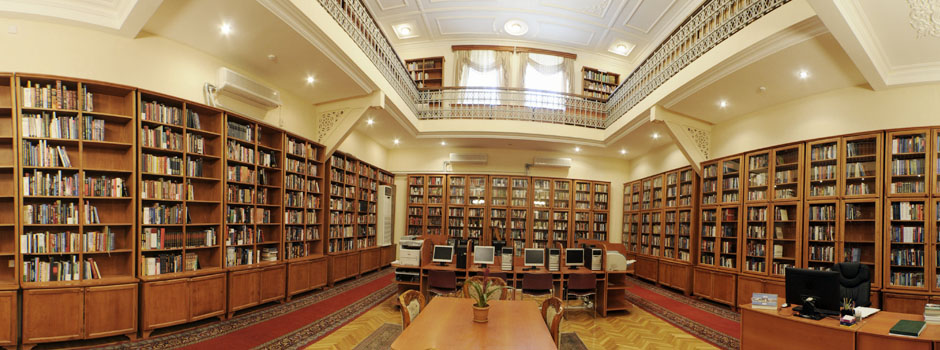

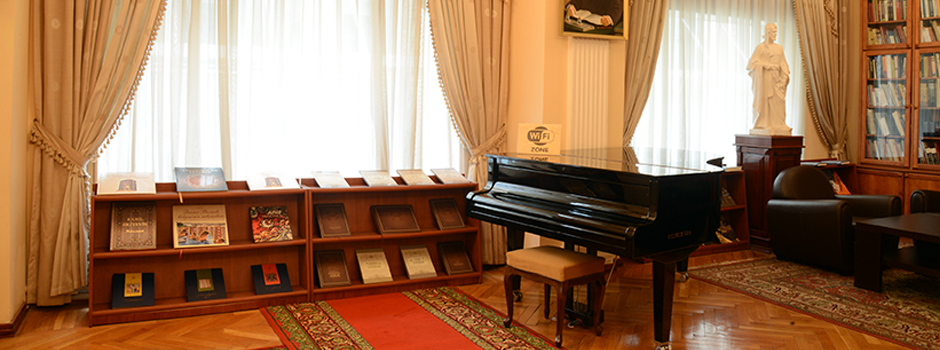
The hall of electronic resources
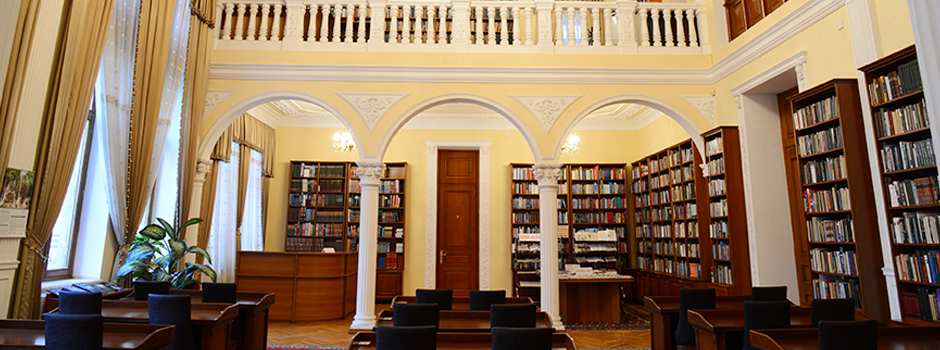
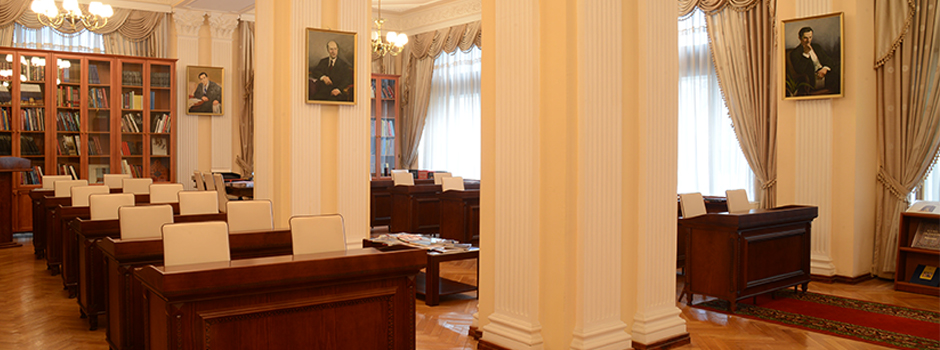
The great reading hall
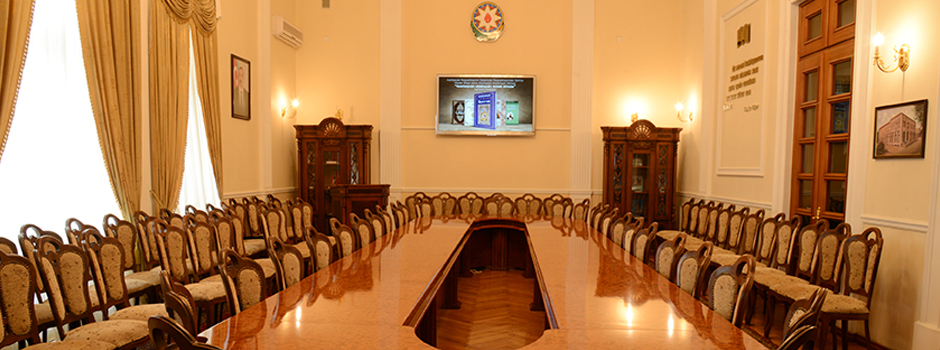
The Conference hall
The foundation art literature
The fund of rare literature
Catalogs
Subscription
    E - LIBRARY     |    E - BOOKS    |    E - RESOURCES    |    E - PROJECTS
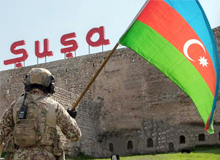
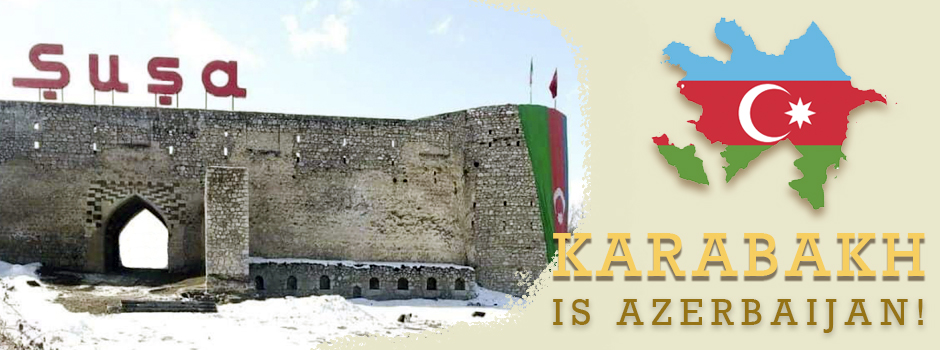
8 may – Occupation Day of Shusha

8 may - Occupation Day of Shusha

Shusha is one of the most beautiful cities of Azerbaijan. The name of "Shusha" means glass being symbolizing pure, remarkable transparent mountain air. The nature had gifted Shusha by unique rills and mineral waters. Among them Turshsu, Isa bulag, Sakina-bulag, Isti-bulag, Soyug-bulag, Charikh-bulag, Cakhsi-bulag, Yuz-bulag and others.
Shusha is engirded from both sides with powerful fortress wall. The city by its birth is obliged to emerging and rise of puissance of Garabag khanate. With a view of foreign invaders the Governor of Panahali-khan's khanate constructed serious of fortresses, particulary, Bayat and Shakhbulag, had strengthened Askeran fortress. However, that was not enough. Khan with all this yard several during years he lived in fortress of bayat and Shakhbulag, and soon, in 1756-1757 years he erected the fortress of which had been called Panahabad, and a few later-as per name of around laying village - Shusha. Among people, that fortress had been already known under the name "Gala". City-fortress for many years was capital of Azerbaijan Garabag khanate.
Starting from the second half of XVIII century, the city population intensively commences to rise up and Shusha is converted in one of the considerable cities of Azerbaijan. Being still in term of Panahali khan, in the city there were sufficient amount of constructional works had been run. The city had been well - equipped and become flourished. In 80 years around the city there are being emerged numerous handicrafts quarters. Especially trading is rising up. Shusha merchants were in commercial links with Tebriz, Tehran, Isfahan, Moscow and other cities. In the city there were coined - panabadi (panahabadi).
By its picturesque sight having been allocated highly in mountains Shusha caused admiration and surprising among travelers. Painter Vereshagin wrote: "Its houses are correct, beautiful, high and illuminated by splendid numerous windows. The city was made of rock taken from bluffs on which it is allocated. Streets are paved everywhere with wide plates, roofs were made of cutting".
Main Street - Rasta bazaar constructed with trading rows and craftsmen workshops.
Covered galleries, framed with stoned columns, formed the architecture of the street. Singularity of Shusha trading center is added by being adjacent to its roadway, with sufficient large marketing squares.
Main square is Meydan, stretched out alongside the axis of Rasta - Bazaar, and overbuild by religion and trading constructions, rows of one - floor counters, by two-story caravanserai and expressive cathedral mosque with two minarets.
Living houses of Mehmandarov brothers and dwelling house allocated on Fizuli street, are bungalows of the most prosperous part of population, an interior forming of which might create an atmosphere of the eastern living house.
All who once visited Shusha definitely came here in the place of "Jidir-duzu" (field of horse-race) on edge of head rounded fall of Dashalti and the well-known abrupt stair "girkh pillakan" (forty steps), leading to Dashalti River. There not far, you might find out "Khazina-Gala" cave (fortress of treasures).
Shusha is homeland of many outstanding azeries. Among them are singers - Jabbar Garyagdi oglu, Gurban Pirimov, Bul-Bul, Seid Shushinski, Khan Shushinski, Rashid Behbudov, eminent composer Uzeir Hajibeyov, his brother Zulfugar Hajibeyov, their nephew Soltan Hajibeyov, Niyazi, Fikret Amirov, Suleyman Aleskerov and many others, talent of which gave to Shusha the name - "Conservatory of the East".
In Shusha there were born writers N.Vezirov, A.Agverdiyev, S.Akhundov, the well-known poetess Khurshid-banu Natavan, poet Gasumbey Zakir, sculptors and painters J.Garyagdi, T.Narimanbeyov and others.
In Shusha, there were existed 170 buildings - memorials of architecture and 160 monuments of art of the past. Among them "Ganja gates", wall fortress, Ibrahim-khan castles and his daughters Gara-Beyuk-khanum, imaret of Garabag khans, house-museum Natavan, house of artillery general Mehmandarov, participant of defense of Port-Arthur, house of poet and painter Mir Mokhsun Navvab, house-museum of eminent composer Uzeir Hajibeyov, house-museum of wonderful singer Bul-Bul, mausoleum of Vagif poet.
Not far from Shusha at height of 900 meters, it was allocated Khankendi town. First, this locality under name of Verende is reminded in written sources referred to IX century. that name has been taken from the name of Turk speaking tribe, habituated in those places. In the end of XVIII century - beginning of XIX century here by Mehdi-Gulu-khan (son of Panahali-khan) was constructed settlement named Khankendi (Khan village).
Later on, that village he gifted to his wife Perijan Begim. Palace of khan did not stored and time erased his traces. There were left, being belonged to Mehdi-khan Khan-bagi (khan forest) and Khan-bulagi (khan rill). In 1923 Khankendi had been renamed into Stepanakert. The name had been recovered to the town following establishment of independence of Azerbaijan.


“Azerbaijan doesn’t exist without Shusha,
Agdam or generally Garabakh.”
Heydar Aliyev,
National leader


Regret For Shusha
The music written and sung by Master Khan Shushinsky makes a deep impression on everybody. The reason is black clouds over Shusha, founded by Panaheli Khan Javanshir. Shusha was occupied by Armenian invaders on May 8, 1992.
Tens of historical monuments were seized in Shusha, which considered the residence of music as: The palace of Panaheli Khan, The Juma Mosque, Lower Govhar Aga mosque, the house of Khurshudbanu Natavan, the tomb of Molla Penah Vagif. Even the monuments of personalities as U.Hajibeyov, Bulbul, Natavan were shot by the enemies.
But everybody believes that, in the near future the black clouds over Shusha will be disappeared, Shusha will liberate and refuges will return to their motherland. So, “Garabagh shikestesi” will be sounded in Shusha again…
Shusha is the most picturesque of Garabagh. Every visitor was amazed by the beauty of this city, which was victim of many historical events. Shusha was not only place as paradise, but also a military strategic castle.
Shusha is situated 1400-1500 metres above sea –level. There are a lot of mineral springs and deposits of building materials. Amazing building of Shusha was founded by Panaheli Khan. He was announced as a Khan after death of Nadir Shah in 1747 and the he decided immediately to build strong castle with the purpose to defend Garabagh from the enemy attack. New castle was founded in a high plateau surrounded by mountains from three sides in 1750. Panaheli khan had new buildings and his own palace built inside of fence. Local population called the new city “Panahabad” in the honor of Panah Shah. For the first time Panahabad recalled “Shishe” then “Shusha”.
After the death of Panaheli Khan crafty and skilful statesman Ibrahim Khalil Khan became the Khan of Garabagh. During his authority Garabagh improved and developed. Panaheli Khan and Ibrahim Khalil Khan restored Shusha in high level on the basis of ancient and Middle Ages city building examples. The city was divided to 17 districts. They still exist at the moment. Generally, the formation of Shusha as a city was in 3 stages:
The first stage continued until 1763 irregularly. In this period there were built 9 districts in the east part of the city by name “Chuxur”. But the quality of construction was grater in the second stage during the authority of Ibrahim Khalil Khan. In this period the number of districts became 17. In the third stage there were built 12 districts in the highland part of the city and the formation of Shusha was over.
The west part of Shusha was situated 1800 metres above sea-level, but the east part was 1400 metres. South of the city was relatively high and horizontal flat. This place was called “Cidir duzu”. The area of Shusha was 350 Ha. There was only one motor transport in Shusha. This transport leads to the centre of the city. The mountain which was situated in the east of the city was called “Dotalab”. Aga Mehemmed Shah Gacar attacked to Garabagh in 1795 after seizing power in İran. Although Shusha was in encirclement for 33 days, he couldn’t make progress and plundered Tiflis.
In 1797 Aga Mehemmed Shah Gacar attacked to Shusha for the second time. Shusha surrendered during short encirclement because of noblemen’s betrayal.
Authority of Aga Mehemmed Shah Gacar continued just one day. Gacar was assassinated by his employee. Ibrahim Khalil khan came back to Shusha and sent the corpse of Gacar to Iran grandiloquently with the purpose of getting well with Iran.
Ibrahim Khalil Khan`s daughter married with Fatali Khan. Shusha kept its position as a capital during Russian occupation. But it was useful for Russia and they found great solution for making weaker Garabagh. They began to remove homeless and beggar Armenians. On May 4, 1805 the contract of Kurakchay was signed. Then there were signed the contracts of Gulustan on October 12, 1813 and the contract of Turkmenchay on February 10, 1828.
These contracts helped to continue the sharing of Azerbaijan lands between Iran and Russia. 18 thousands Armenian families were removed from Iran to Azerbaijan, at the same time to Garabagh during the second Russia-Iran war. According to “Turkmenchay” during 2 years (1828-1830) more than 40000 Armenians from Iran and 84000 Armenians from Turkey were removed to South Caucasus. They were placed in the best part of Irevan and Ganja province.
In 1832 the 91 % of the population was Azerbaijanians and 8, 4 % was Armenians. As the result of removing, the number of Azerbaijanians became 64, 8 % and the number of Armenians increase until 34, 8 %.
In 1900-1915 amount of the population of Shusha increased from 25, 6 thousand to 43, 8 thousand and Shusha became the centre of carpet production.
At the end of XIX centure Armenian organization began trying on achieving the lands of Azerbaijan-Garabagh, Nachcivan and Zengezur for creating “Great Armenia”. In this direction the first target was to occupy Zengezur and Garabagh.
In 1918 there was created present Armenia Republic in the territory of West Azerbaijan. After this “present” of Azerbaijani leadership Armenian leadership pretended to territory of Garabagh officially.
In the XX century Shusha was encroached by Armenians for 3 times. In 1905-1907 Shusha was attacked and burned by Armenians. In 1920 the most part of the city was destroyed by Armenians. For the third time Armenians occupied the city completely.
Shusha still exists…
The occupation in the direction of Shusha began from Mesheli, Kerkijahan, Malibeyli,Gushchu… and Khojali. Nobody could believe in occupation of Shusha, it was difficult even to imagine it. But it happened and Shusha was occupied by Armenians and Russia on May 8, 1992. This day was shock for Azerbaijan people.
These old and holy lands have already been occupied by Armenian aggressors for 16 years. Our culture and educational institutions- 8 museums, 31 libraries, 17 clubs, 8 culture house, 25 secondary schools, 4 medicines and 241 historical monuments were destroyed. Then valuable wealth of Shusha museums, painting and sculpture works, carpet and carpet products, archeological findings, very useful documents, well-known Azerbaijanian personalities’ memory things and other precious materials had been carried to Armenia. At the moment those things are sold in foreign auctions or they are introduced in different exhibitions and museums as Armenians’. There were State Dramatic Theatre, State Garabagh Museum and Historical museums of Shusha, memory museums of U.Hajibeyov, Bulbul, Mir Movsum Nevvab,the branch of Azerbaijan State carpet museum, State painting Gallery, music schools and libraries in Shusha. Very tragic events happened in Shusha in the XX century.
Let’s note that, though Shusha is in bondage, most of culture and education centers which were in Shusha at the beginning of the century continue their activity in Baku or other regions.
After the occupation of the city Shusha on May 8, 1992 State Dramatic keeps on working in the Theatre of Young Audience in Baku.
At the moment, more than 15 thousand inhabitants of Shusha are placed in different sanatoria, boarding-house, camp and hostels of Baku.
Formerly, Shusha was consisted of one City Soviet. Now, there is one city representation and 12 village representations and its population were placed in 59 regions of Republic. On the eve of occupation of Shusha the population Shusha was 26 thousand, now it became 25 thousand. At the moment, 16 secondary schools from 25 ones continue their activity in Baku, but 9 ones are placed in different regions of Azerbaijan. District Culture and Tourism Department and 8 Children's Music-Schools, Music Technical Schools, Cultural and Educational technical schools are working in Baku.
There were prepared some training plans in the Executive Power of Baku according to the following orders of the President:
“About accelerating of socio and economic development in the regions of Azerbaijan Republic” on November 24, 2003 and “About confirming of state program on socio and economic development of Azerbaijan regions” on February 11, 2004. Four new farms were created.
A lot of Azerbaijan historical personalities and art-worker grew up in Shusha. So Shusha can never belong to other Nations. Although the enemies occupied Shusha and removed our villages, they can never own our Shusha.
Our national leader, great personality, well-known statesman Heydar Aliyev has fought for liberating our regions without war. Today the President of the Republic Azerbaijan Ilham Aliyev continues this politics regularly. Mr. Ilham Aliyev repeated a lot of times that, until the territorial integrity of Azerbaijan reconstruct, there can’t be any agreements.
10 may – Birthday of the National Leader Heydar Aliyev

10 may - Birthday of the National Leader Heydar Aliyev

In connection with brithday of the National Leader Prezidential Library renewed its e-resource on life and activity of heydar Aliyev. http://heydaraliyev.preslib.az/
17 may – World Information Society Day

17 may - World Information Society Day

The annual observance of World Telecommunication Day, which marks the founding of the International Telecommunication Union (ITU) on May 17, 1865, drew attention to the work of ITU and the challenges of global communication. In March 2006, the United Nations General Assembly proclaimed May 17 as World Information Society Day to recognize the efforts made to advance communication and ITU’s role in helping people connect around the world.
18 may – Occupation Day of Lachin

18 may - Occupation Day of Lachin

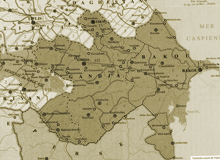
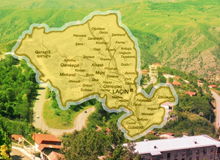
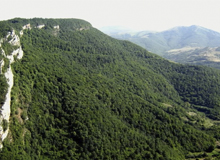
The region of Lachin is located in the mountainous south-west of Azerbaijan Republic. It’s is bordered on Kelbajar in the north, Khojali, Shuha and Khojavend in the east, Gubadly in the south and Armenian Republic in the west.
In 1923 Shusha gaza(territorial unity) liquidated and established new Agdam gaza, because of the foundation of Nagorno-Karabakh Autonomous Republic. According to the decision of the Central Executive Committee of the Republic the same year Gubadly, Kelbajar and Lachin united into one gaza of Kurdustan. The first centre of the gaza was Pirjahan. Later in shifted to Minkend and then to Lachin.
The place and the name of Lachin was chosen by Tagi Shahbazi Simurg. Daily consumption of water was 4800 cube from the centralised water supply system that of gas 173000 cube from gas network and 985000 kg of liquid gas.
Tagi Shahbazi Simurg, Husu Hajiyev, Ismail Sherifov, Janbakhish Abdullayev were the founders of the town and many others played great role in its development.
During the World War 2nd Lachin sent 3660 people to the front, 2426 of them did not come back.
At the beginning of 1950-s highway appeared in Lachin. The length of the highway till Baku was 450 km and that till Khankendi railway station about 60 km. Beginning with 1962 the town and later the villages of the region supplied with electricity, radio and telephone lines.
The region disposed 166488 hectares of land, 75781 of which were useful for agriculture and 12102 hectares were cultivated. 1515 hectares of the land were water-retaining soil.
927 hectares of the region were farmland, 33205 hectares-forests and 72000 hectares summer pastures. Administrative Department of the President of the Republic of Azerbaijan
The region embraces a town, a settlement and 125 villages that are ruled by 48 representations on the mentioned administrative unities.
Animal breeding and cultivation are the main spheres of the economy of the region.
Decisions adopted by CC of Azerbaijan KP and the Council of the Ministers «About measures to perfect the economy of the mountain regions», «About measures to improve cultural and life cervices to Lachin labourers» dated from November 16, 1971 and the bureau of CC of Azerbaijan KP «About 50 years anniversary of Lachin» from august 6, 1974 with the initiative of the national leader of Azerbaijan people Heydar Alirza oglu Aliyev, stimulated improved of social-economic and cultural life of the people and life conditions of the people. It also strengthened material-technical base of the economy, special concessions applied to acceptance school graduates to high schools. Well-built the towns and villages, founded automatic-telephone station of about 1000 numbers and television translation stations as well, all the villages supplied with the telephones, radio, electricity. Lachin city and 53 villages of the region supplied with natural gas.
Many of schools, objects of culture, domestic objects, medical objects, complexes of animal-breeding and other social-cultural and agricultural objects built with the initiative of the national leader, the villages supplied with highways, rebuilt Shusha-Lachin road, presented to the exploitation asphalt factories, stone mine, manufactories of lime, pemoksol, local industry and weaving, opened the affiliates of Sumgait plant of Aluminium and machinery construction and Baku medical technical school 1, also presented to the exploitation marble fields, extended the system of trade, public catering, culture, communication and communal services as well.
133 offices and enterprises-23 construction and 16 industrial enterprises functioned in the process of reforms. The region had a bus-station, 82 bus stops, 2130 km highways, 92 bridges, 1187 km water pipe, 33 water basins, laundry, 15 km central sewerage, 20 km heating system, 14 bathing houses, 8 refueling stations, 1636 km electric air lines, 498 km gas line, 10200 km radio-phone communication lines, 3 TV stations and transmitters and so on.
Armenian Occupation
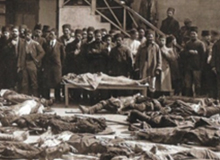
On May 18, 1992 Armenian armed forces occupied Lachin in the result of betrayal. Armenians robbed all under- and over-ground riches, sell our lands, destroyed the graves of our ancestry.
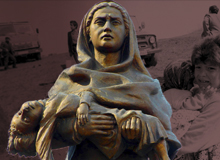
65507 people of the region turned to refugees and settled in 59 cities and regions of the republic and 84 habitations in winter camp.
As a result of Armenian occupation 1835 square kilometers of Azerbaijan’s territory were invaded, Lachin gave 264 martyrs, 65 hostages and 103 men became invalids. 18 of 24374 children from 1 to 18 years old were martyrs, 255 became invalid, 1071 and 31 lost both their parents. The region was damaged in amount of 7 point 1 billion dollars.
In the beginning of 1992, Armenian armed forces invaded the last residential area of Azerbaijanis in the mountainous part of Garabag. On the 8th of May, Armenian nationalists occupied the whole upper Garabag by invading Shusha, the ancient cultural and musical center of Azerbaijan. Further, Armenian invaders had to seize Lachin region of Azerbaijan in order to unite the upper part of Garabag to Armenia. Over the night from 17th to 18th of May of 1992, Armenian armed groups attacked the region of Lachin and further occupied castle-gate of Azerbaijan on May 18. Occupation of Lachin showed that the aggressive policy and intention of Armenians went beyond the borders of Daglig Garabag. The way called the “humanitarian corridor” by Armenian fascists actually annexed Daglig Garabag to Armenia. The weapons, ammunitions and military forces brought to Garabag via this corridor widened the scale of Armenian aggression and caused great danger and threat to the surrounding regions and villages of Azerbaijan.
18 may – International Museum Day

18 may - International Museum Day

On and around 18 May next, museums worldwide will celebrate International Museum Day. Established in 1977 by the International Council of Museums, more than 30,000 museums in around 100 countries will hold special activities on this occasion.
21 may – World Day for Cultural Diversity for Dialogue and Development

21 may - World Day for Cultural Diversity for Dialogue and Development

The World Day for Cultural Diversity for Dialogue and Development provides us with an opportunity to deepen our understanding of the values of cultural diversity and to learn to “live together” better. The UN General Assembly proclaimed 21 May the World Day for Cultural Diversity for Dialogue in its resolution 57/249 and welcomed the Universal Declaration on Cultural Diversity adopted by the General Conference of the United Nations Educational, Scientific and Cultural Organization (UNESCO) at its thirty-first session on 2 November 2001 and also welcomed the main lines of the Action Plan for the implementation of the Declaration.
Archive: 1 | 2 | 3 | 4